Plastic eating enzyme that turns it back into a usable raw material discovered.
Wednesday - April 18, 2018 4:17 pm ,
Category : WTN SPECIAL
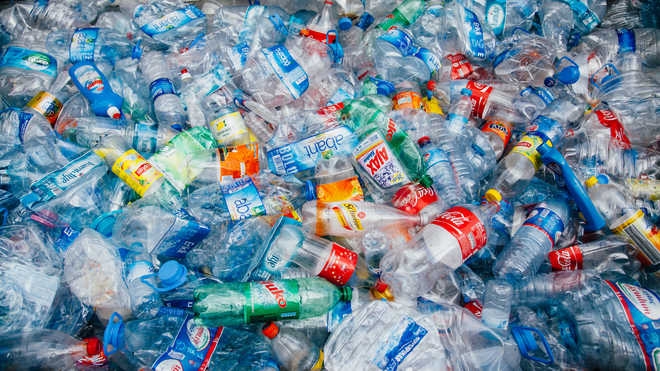
April 18 (WTN) - Scientists at the University of Portsmouth and the US Department of Energy’s National Renewable Energy Laboratory (NREL) accidentally mutated an enzyme found in a recycling facility in Japan several years ago. The resulting enzyme can digest some of the most commonly polluting forms of plastic.
What to do with plastic bottles that are going to waste, often winding up in the ocean? Scientists at the University of Portsmouth and the US Department of Energy’s National Renewable Energy Laboratory (NREL) accidentally mutated an enzyme found in a recycling facility in Japan.
The mutant enzyme takes a few days to start breaking down the plastic – far faster than the centuries it takes in the oceans. But the researchers are optimistic this can be speeded up even further and become a viable large-scale process reports The Guardian.
In a research titled “A bacterium that degrades and assimilates poly(ethylene terephthalate) “ published in journal “Science “ on 11 Mar 2016 by Shosuke Yoshida, Kazumi Hiraga, Toshihiko Takehana, Ikuo Taniguchi, Hironao Yamaji, Yasuhito Maeda, Kiyotsuna Toyohara, Kenji Miyamoto, Yoshiharu Kimura and Kohei Oda says that - Bacteria isolated from outside a bottle-recycling facility can break down and metabolize plastic. The proliferation of plastics in consumer products, from bottles to clothing, has resulted in the release of countless tons of plastics into the environment. Yoshida et al. show how the biodegradation of plastics by specialized bacteria could be a viable bioremediation strategy (see the Perspective by Bornscheuer). The new species, Ideonella sakaiensis, breaks down the plastic by using two enzymes to hydrolyze PET and a primary reaction intermediate, eventually yielding basic building blocks for growth.
After this a breakthrough in enzyme research led by the U.S. Department of Energy’s National Renewable Energy Laboratory (NREL) and the United Kingdom’s University of Portsmouth has led to an improved variant of an enzyme that can break down ubiquitous plastic bottles made of polyethylene terephthalate or PET as reported by NREL on April 16, 2018.
What to do with plastic bottles that are going to waste, often winding up in the ocean? Scientists at the University of Portsmouth and the US Department of Energy’s National Renewable Energy Laboratory (NREL) accidentally mutated an enzyme found in a recycling facility in Japan.
A new plastic-eating enzyme which could solve one of the world's biggest environmental issues has been discovered by scientists at the University of Portsmouth and @NREL
— University of Portsmouth (@portsmouthuni) April 16, 2018
Read more: https://t.co/40SOf85ZW6 @PNASNews #environmentalscience
Video credit:@upixphotography pic.twitter.com/U56vcpMoeW
The mutant enzyme takes a few days to start breaking down the plastic – far faster than the centuries it takes in the oceans. But the researchers are optimistic this can be speeded up even further and become a viable large-scale process reports The Guardian.
In a research titled “A bacterium that degrades and assimilates poly(ethylene terephthalate) “ published in journal “Science “ on 11 Mar 2016 by Shosuke Yoshida, Kazumi Hiraga, Toshihiko Takehana, Ikuo Taniguchi, Hironao Yamaji, Yasuhito Maeda, Kiyotsuna Toyohara, Kenji Miyamoto, Yoshiharu Kimura and Kohei Oda says that - Bacteria isolated from outside a bottle-recycling facility can break down and metabolize plastic. The proliferation of plastics in consumer products, from bottles to clothing, has resulted in the release of countless tons of plastics into the environment. Yoshida et al. show how the biodegradation of plastics by specialized bacteria could be a viable bioremediation strategy (see the Perspective by Bornscheuer). The new species, Ideonella sakaiensis, breaks down the plastic by using two enzymes to hydrolyze PET and a primary reaction intermediate, eventually yielding basic building blocks for growth.
After this a breakthrough in enzyme research led by the U.S. Department of Energy’s National Renewable Energy Laboratory (NREL) and the United Kingdom’s University of Portsmouth has led to an improved variant of an enzyme that can break down ubiquitous plastic bottles made of polyethylene terephthalate or PET as reported by NREL on April 16, 2018.