An Interview with Laurent Baheux

An Interview with Laurent Baheux
Laurent Baheux is a world renowned photographer currently working on the projects with animals, wildlife and nature. French photographer who is known for high contrast black and white photographs of nature and wildlife.Laurent born in Poitiers in the year 1970 was a successful sports photographer working in the field of journalism and editing at first, and later inculcated interest in testing in all spheres of photography and looked at nature. Laurent is the winner at "International Wildlife Photographer Of The Year," competition in the year 2007 in the creative nature of nature category and this was the starting point of his artistic career on the subjects of animal and wildlife. Africas offer a lot in animal world photography and Mr Baheux has always been fascinated by Africa. Laurent born in Poitiers in 1970, the region in the west of France, however, was always fascinated with wildlife and Africa.Out of his attraction toward Africa here is his last book “The Family Album of Wild Africa.”
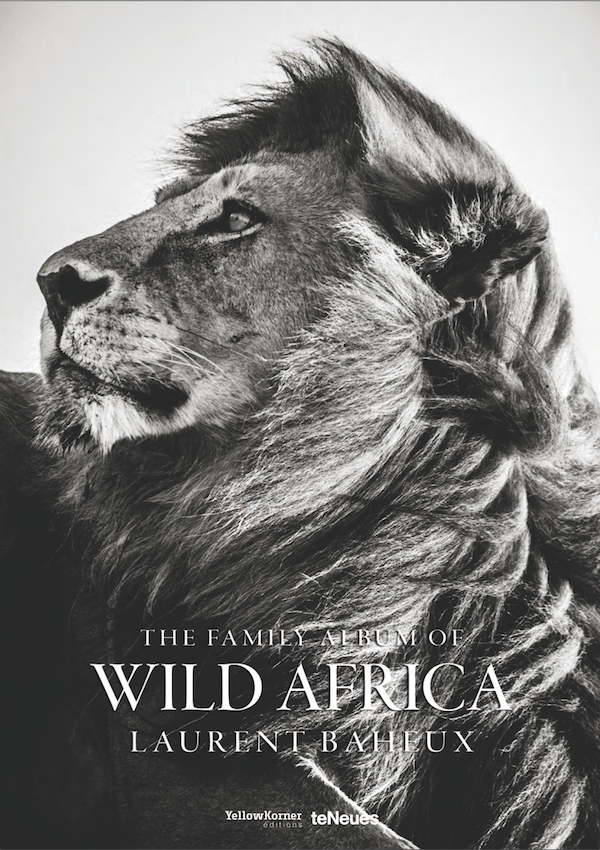 It's a privilege that www.windowtonews.com gets an opportunity to Interview the Legendry photographer. Laurent Baheux cares for nature and wild animal who are unable to express their grief, as human when we are causing continuous damage to the house of wildlife, Mother Nature. Laurent in his efforts with the medium of Photographs had tried to spread the awareness about the continued damage humankind is bringing to the world of the animal, his photograph galleries worldwide and in awareness campaigns for conservation and environmental organisations depicts the idea of his care for nature.
Tell us a bit about your Personal Life.
I was born and lived in Poitiers region, in West of France, though not in town but in the countryside where my parents wanted to raise awareness and educate me about the beauty and fragility of nature, and that was the beginning of my inspiration for wildlife. I particularly thank my father, who taught me the patience to observe animals, insects and plants around us.
When did you find photography as a career? How did it happen?I was not supposed to become a photographer. I started in photography while I was working for a local daily newspaper in Poitiers. At that time, I was a sports news reporter and I wrote the minutes of the games. The editor asked me to complete my articles with pictures. I accepted and soon, I began to enjoy taking pictures, more than I would enjoy writing. This is how I ended up as a photographer.
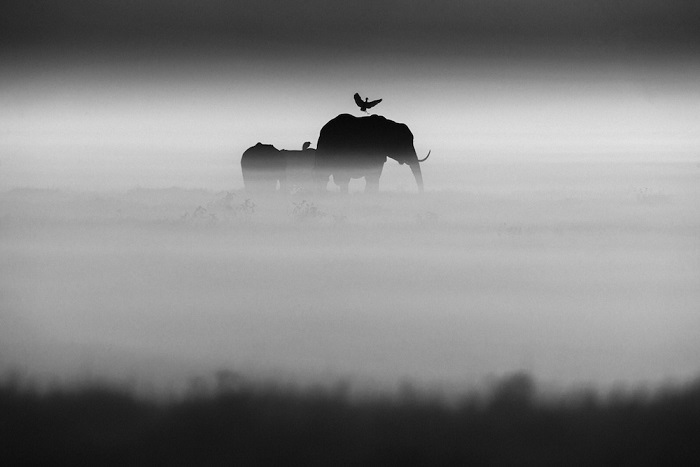
Elephants and bird, Kenya 2015 © Laurent Baheux
You first started as a photographer in sport and current affairs, what events led you to change that and pursue nature photography?
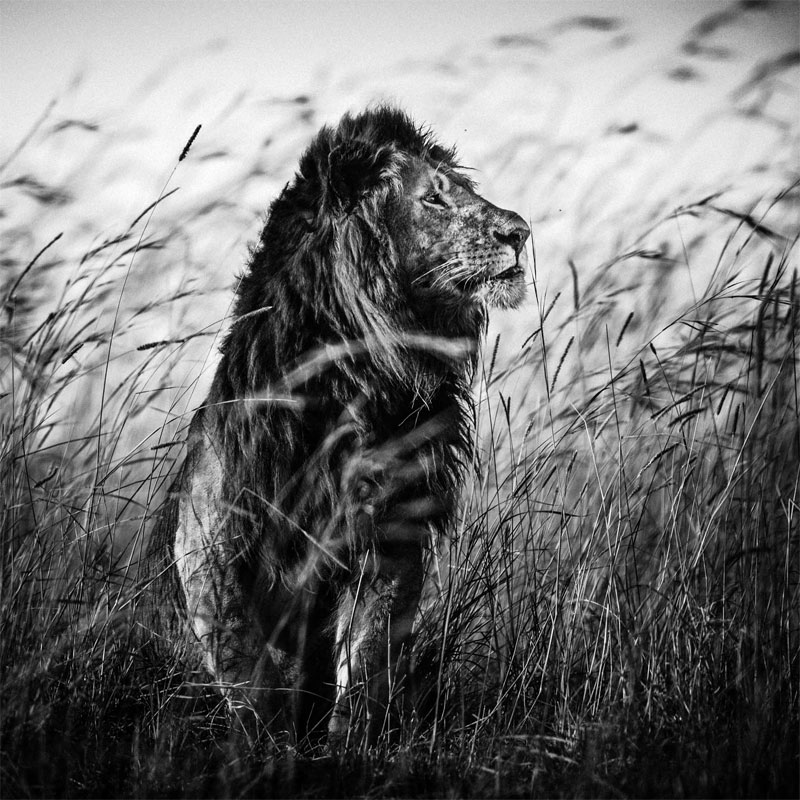
Describe what it is like to photograph dangerous animals? What feelings to do you have?
In fact, I feel less danger photographing wild animals than living with civilised people. Wildlife rules are simple and clear. It is not always the same thing with humans.I feel a lot of emotions when I take a picture in the wild: maybe that is something like confidence and concentration, a tranquil state of body and mind.
You are an activist for a few organisations, could you explain your role and how you contribute?
I think that the communication of organisations I work with - like the WWF, United Nations, GoodPlanet or Wings4Wildlife- evolves towards a certain aesthetic and artistic vision. I believe people are fed up with shocking images of destruction, poaching and deforestation – even though those images are important to share because we all must know what is happening on our planet. I don’t know if there is hope. But I do believe people want hope.
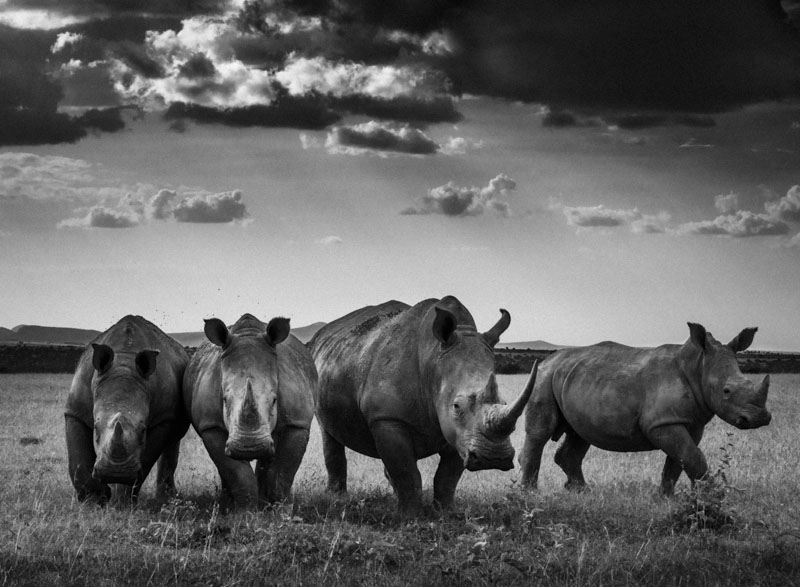
Rhinos quartet, Kenya 2013 © Laurent Baheux
Could you explain what you are trying to purvey to your audience with your photographs?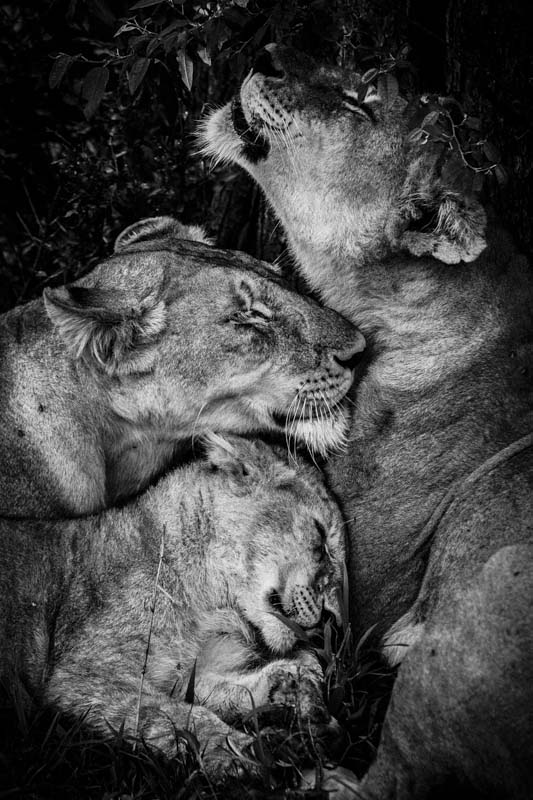
Do you believe, as a global community, we are doing enough to preserve our planet?
Of course not. I think that we have two major problems: overcrowding and over-consumption.
What are your hopes for environmental and nature initiatives going into the future? What do you think needs to change?
It is important for us to have a conscience about animals, and our impact on them. We must open our minds to the fact that we are on a living planet and are just a piece of this wonder. We have to leave more space, more life, for all other species because we will not survive at their extinction. It is humanity’s absolute challenge.
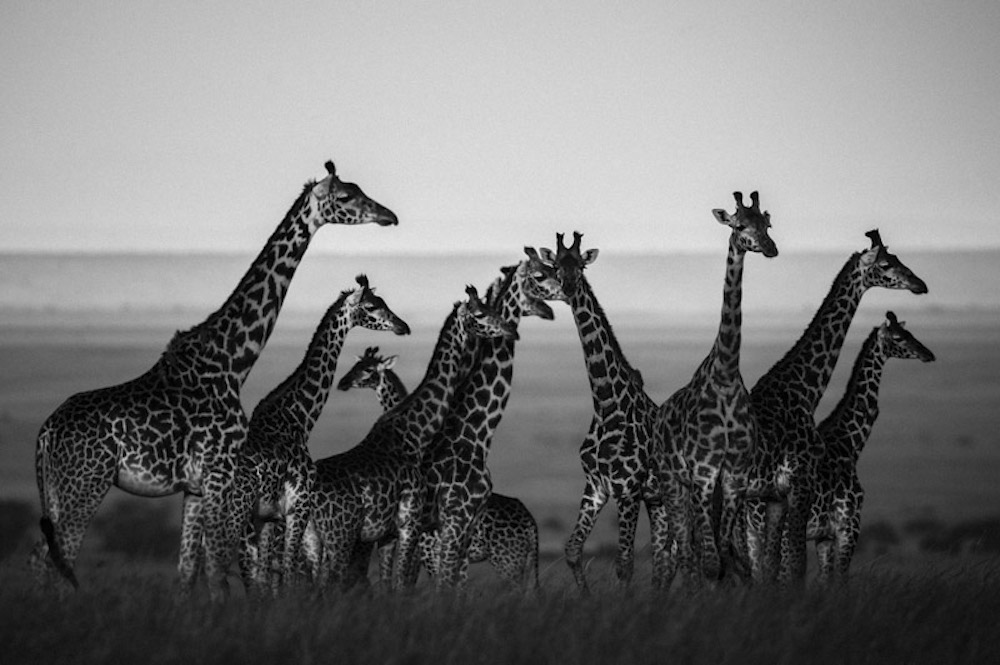
Giraffes in harmony with their natural setting, Kenya 2013 © Laurent Baheux
What are your greatest lessons learned from your experiences?
My biggest lesson is my perception of our place on Earth. We are part of the wider family of all living beings. That's why the name of my last coffee table book is "The Family Album of Wild Africa". I try to create a connection between animal and viewer because viewers discover a personality in the animals, and realise they have emotions too.
Any plan of travelling to India as India can be a good subject for your photography.
I had travelled to your beautiful country many years ago. My aims were to capture some shoots of the tiger that is, for sure, one of the most impressive Indian animals. Nevertheless, it was just one time and it is not enough to publish a series. Maybe I will come again to follow my work.