Art and culture has been reduced to a spectacle
New Delhi May 8 (IANS) Leading art practitioners have asserted that Indian culture and art forms that have preserved their core traditions for millennia are being reduced to a mere spectacle today in the race to keep up with the fast-changing times.
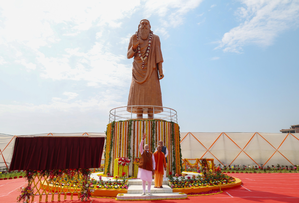
At an open discussion organised by the Raza Foundation in collaboration with the Civil Services Officers Institute on Sunday evening a panel consisting of renowned architect Vikram Lall Bharatanatyam dancer and Guru Rama Vaidyanathan and poet and film writer Udayan Vajpeyi discussed the concept of Novelty in Performing Arts. Lall who designed Delhi s Akshardham temple and Patna s Buddha Smriti Park said that India is renowned for its musical and other art traditions that have evolved over time but these continue to have a thread that ties them across centuries. In architecture we talk about transforming ideas and not transferring them. Change and innovation is what make art forms survive he said. However the modern tendency of making a show and a spectacle out of everything is diminishing both art and the idea of innovation he added. A spectacle presumes a stupid audience said Udayan Vajpeyi. He noted that the ‘rasik the appreciative audience member is an integral part of an Indian performance or concert. We tend to copy the West mindlessly in so many things. For instance we dim the lights in a concert hall for a classical music performance but in India the artist responds to the audience they improvise according to audience reaction it is spontaneous. He said the novelty in Indian art forms comes from the teaching of the art. Western traditions aim for sameness but the Indian guru lets the disciple learn according to their own understanding and disposition which is a great method of learning and encourages innovation. Dancer Rama Vaidyanathan said artists have to look beyond the classroom the gharanas and traditions and will have to free themselves from these shackles to bring freshness to their art. For a dancer novelty does not happen forcefully or overnight she said. It comes after years and years of creating dialogues with the dance form and with practice. This lays the foundation to create new things and push boundaries. It is an organic process and it is good for the art form. When I work with Kathak or Odissi artists I learn things Vaidyanathan said. I have to look beyond my dance form to create something new in my dance form. But that does not mean you are abandoning the core principles of your dance form because it is already a part of who you are. She said she hopes to make dance secular transcending the boundaries of cultures and religion and use it as a medium to address social issues. Eminent Hindi poet Ashok Vajpeyi the Managing Trustee of Raza Foundation introducing the panelists and the subject noted that people in the modern times tend to see performing arts as very repetitive because as an audience they are moved by a questioning of traditions. But in the Indian context the deviation and questioning takes place within tradition. One doesn t have to go out; and this is seldom understood he said. Years ago when Pandit Ravi Shankar started having long alaaps on the sitar it was something not done before. He did that on his own as an individual artist but that has now become tradition. Our performing arts have not been eroded as a result of introduction of novel things they have been kept alive by it he added. The discussion was part of the new monthly series titled Art Dialogues introduced by the Raza Foundation featuring expert practitioners from the world of ideas literature visual arts performing arts and various other disciplines. The Foundation set by the late artist S H Raza provides support and platforms for various arts publications and fellowships especially aimed at young talent. --IANS ss/vm