US develops biodegradable semiconductor to reduce e-waste
New York May 4 (IANS) US researchers have developed a flexible organic and biodegradable semiconductor that can help to cut the mounting pile of global electronic waste a research published said.
Stanford engineer Zhenan Bao and her team created the flexible electronic device that could easily degrade just by adding a weak acid -- vinegar said the Proceedings of the National Academy of Sciences paper.
The team developed the degradable electronic circuit and a new biodegradable substrate material for mounting electrical components Xinhua news agency reported.
Electronic components are usually made of gold. But for this device the researchers crafted components from iron. Bao noted that iron is a very environmentally friendly product and it is nontoxic to humans.
This substrate supports electrical components flexing and molding to rough and smooth surfaces alike. When an electronic device is no longer needed the whole thing can biodegrade into nontoxic components
In my group we have been trying to mimic the function of human skin to think about how to develop future electronic devices Bao a professor of chemical engineering and materials science and engineering said in a statement.
We have achieved the first two (flexible and self-healing) so the biodegradability was something we wanted to tackle.
Previous material designed by Bao s team could bend and twist in a way that could allow it to interface with the skin or brain but it couldn t degrade said the Stanford release.
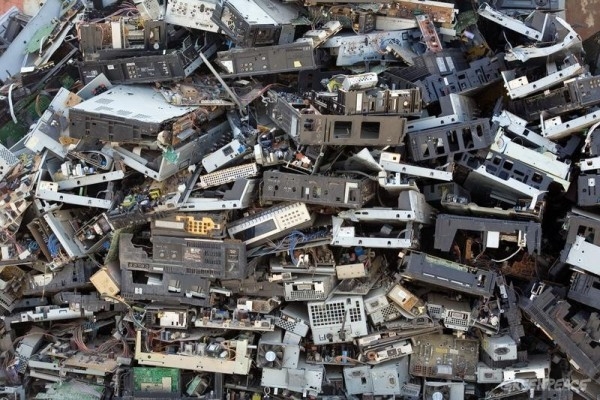
According to a UN Environment Program report titled Waste Crimes up to 50 million tons of electronic waste -- mainly computers and smartphones -- are expected to be dumped in 2017.
That s roughly 20 per cent up from 2015 when about 41 million tons of e-waste was discarded mostly into third world countries serving as global landfills.
--IANS
in/