India begins countdown for South Asia Satellite launch
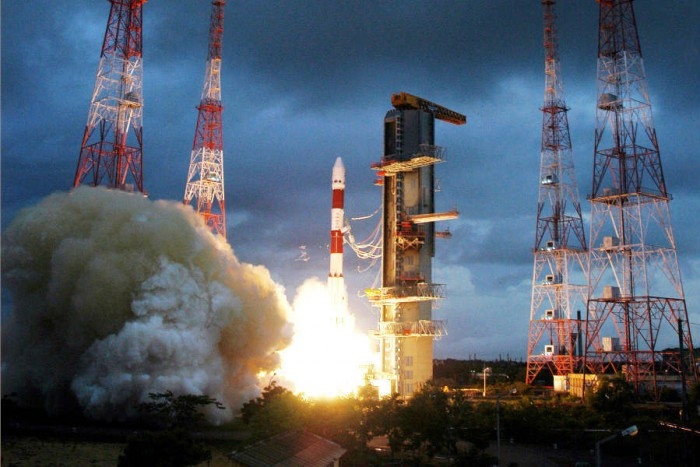
Chennai May 4 (IANS) A 28-hour countdown for the Friday launch of the South Asia Satellite or GSAT-9 commenced on Thursday the Indian Space Research Organisation (ISRO) announced.
According to ISRO the countdown began at 12.57 p.m.
The Geosynchronous Satellite Launch Vehicle (GSLV-Mk II) carrying the GSAT-9 is expected to blast off from the second launch pad at Satish Dhawan Space Centre in Sriharikota Andhra Pradesh.
The GSAT-9 is being launched with an objective to provide different communication applications in Ku-band with coverage over South Asian countries the ISRO stated.
On Sunday Prime Minister Narendra Modi said the South Asia Satellite will go a long way in addressing the region s economic and developmental priorities.
The capacities of this satellite and the facilities it provides will go a long way in addressing South Asia s economic and developmental priorities he said in his monthly radio address Mann Ki Baat .
Natural resources mapping telemedicine the field of education deeper IT connectivity or fostering people-to-people contact this satellite will prove to be a boon in the progress of the entire region.
It is an important step by India to enhance cooperation with the entire South Asia...It is an invaluable gift. This is an appropriate example of our commitment towards South Asia. I welcome all the South Asian countries who have joined us on this momentous endeavour he had said.
The space agency said that the GSAT-9 is configured around the ISRO s standard I-2K bus with a lift-off mass of 2 230 kg and the satellite s main structure is cuboid in shape built around a central cylinder with a mission life of more than 12 years.
According to an official ISRO on experimental basis decided to have electric power for the satellite.
We have not reduced the volume of the traditional on-board fuel because of the electric power. We have added electric power facility to check its performance for use in future satellites the official told IANS.
He said the next satellite with electric power will be the GSAT-20 slated for launch next year.
Meanwhile the ISRO is also gearing up to launch its heaviest rocket GSLV-Mk III later this month.
--IANS
vj/ksk/dg