Fossil site shows impact of Jurassic s low oxygen oceans
Washington July 16 (IANS) Scientists have tracked how a period of globally low ocean-oxygen turned an Early Jurassic marine ecosystem into a stressed community inhabited by only a few species a new study revealed.
The study by the University of Texas - Austin is led by Rowan Martindale an assistant professor at the University of Texas at Austin Jackson School of Geosciences and published on Saturday in the journal Palaeogeography Palaeoclimatology Palaeoeconology reports Xinhua news agency.
The study was co-authored by Martin Aberhan a curator at the Institute for Evolution and Biodiversity Science at the Natural History Museum in Berlin Germany.
The study zeroes in on a fossil site in Canada located at Ya Ha Tinda Ranch near Banff National Park in Alberta province.
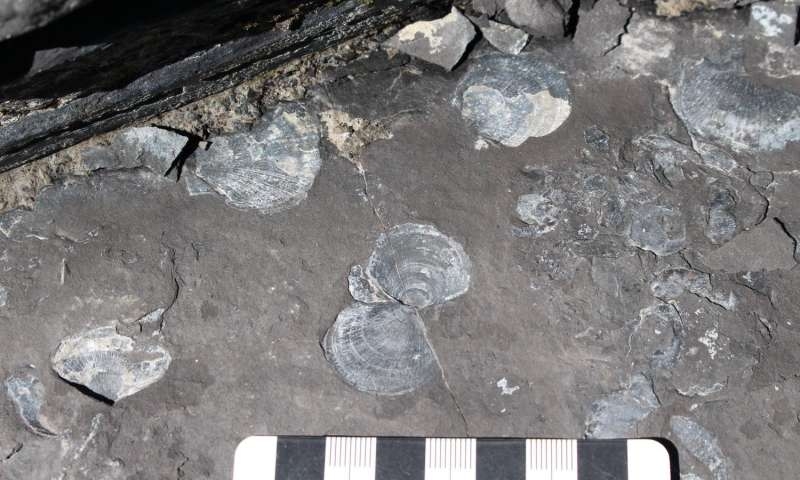
The site records fossils of organisms that lived about 183 million years ago during the Early Jurassic in a shallow sea that once covered the region.
The oxygen level of the surrounding environment during the Early Jurassic influences the type and amount of carbon preserved in rocks making the geochemical record an important method for tracking an anoxic event.
The clams that survived during and after the event were much smaller than the clams from before the event suggesting that low oxygen levels limited their growth.
Since the oceanic anoxic event was a side-effect of climate change looking back at ancient marine communities could be a window into the potential impacts of ongoing and future climate change co-author Aberhan added.
--IANS
ksk/vt