Researchers develop synthetic soft retina
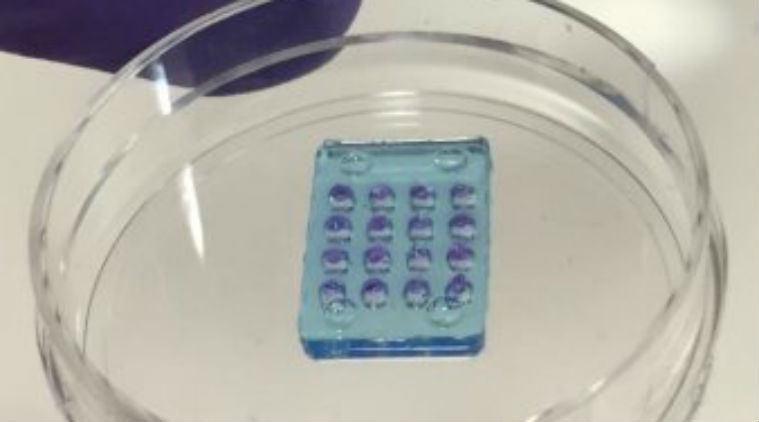
London May 5 (IANS) Offering fresh hope to visually impaired people researchers have developed a synthetic soft tissue retina which closely mimics the natural human retinal process.
The researchers believe that the study could lead to development of new less invasive technologies that more closely resemble human body tissues helping to treat degenerative eye conditions such as retinitis pigmentosa.
Until now artificial retinal research has used mostly rigid hard materials.
The human eye is incredibly sensitive which is why foreign bodies like metal retinal implants can be so damaging leading to inflammation and/or scaring. But a biological synthetic implant is soft and water based so much more friendly to the eye environment said lead researcher Vanessa Restrepo-Schild from Oxford University.
Just as photography depends on camera pixels reacting to light vision relies on the retina performing the same function.
The retina sits at the back of the human eye and contains protein cells that convert light into electrical signals that travel through the nervous system triggering a response from the brain ultimately building a picture of the scene being viewed.
The the new synthetic double layered retina replica consists of soft water droplets (hydrogels) and biological cell membrane proteins.
Designed like a camera the cells act as pixels detecting and reacting to light to create a grey scale image.
The synthetic material can generate electrical signals which stimulate the neurons at the back of our eye just like the original retina Restrepo-Schild said.
The study published in the journal Scientific Reports showed that unlike existing artificial retinal implants the cell-cultures are created from natural biodegradable materials and do not contain foreign bodies or living entities.
Although at present the synthetic retina has only been tested in laboratory conditions Restrepo-Schild said she is keen to build on her initial work and explore potential uses with living tissues. The research is then expected to expand to include animal testing and then a series of clinical trials in humans.
--IANS
gb/bg