New paper-based test can diagnose Zika in 20 minutes
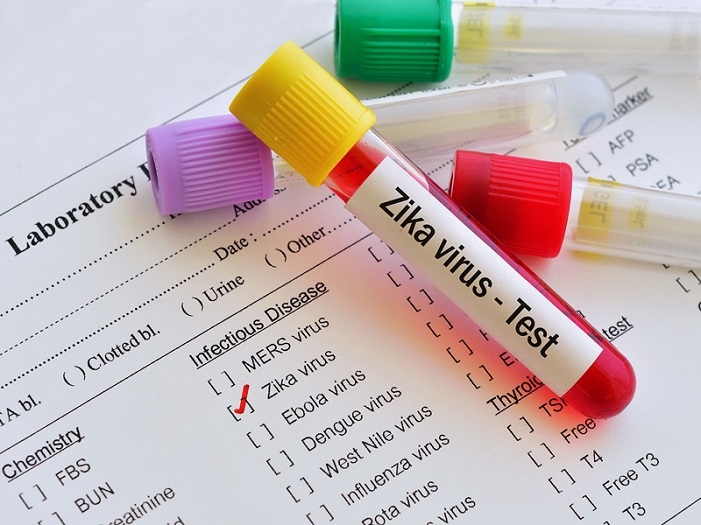
New York Sep 28 (IANS) Scientists have developed a new paper-based test that can diagnose Zika infection within 20 minutes as well as accurately distinguish Zika virus from related viruses like Dengue.
One of the biggest challenges in diagnosing Zika is that many of the tests are based on antibodies that interact with a viral protein called NS1 which is found in the bloodstream of infected patients.
Unfortunately many other viruses from the same family known as flaviviruses have similar versions of NS1 and can produce a false positive. Flaviviruses include West Nile virus and the virus that causes yellow fever as well as Dengue virus.
"It s important to have a single test that can differentiate between the four serotypes of Dengue and Zika because they co-circulate. They re spread by the same mosquito " said Kimberly Hamad-Schifferli Associate Professor at the University of Massachusetts at Boston.
For the study detailed in the journal Science Translational Medicine the team exposed mice to Zika and Dengue viruses and then screened the resulting antibodies in pairs against every flavivirus version of the NS1 protein.
This allowed them to identify pairs of antibodies that react only with one version of NS1.
The researchers used these pairs to create five separate tests one for each virus. They coated strips of paper with one antibody from each pair while the second antibody was attached to gold nanoparticles.
After adding the patient s blood sample to a solution of these nanoparticles the paper strip is dipped into the solution. If the target NS1 protein is present it attaches to the antibodies on the paper strip as well as the nanoparticle-bound antibodies and a coloured spot appears on the strip within 20 minutes.
This approach requires five test strips per sample to test for each virus but the researchers are now working on a version that would test for all five with one strip.
--IANS
rt/amit/dg