India surges ahead in power generation but rural electrification imperative
Tuesday - March 27, 2018 11:30 am ,
Category : WTN SPECIAL
March 27 (WTN): According to India Brand Equity Foundation ( A trust established by the Department of Commerce, Ministry of Commerce and Industry, Government of India ) report of February 2018, India is now the third largest producer and fourth largest consumer of electricity in the world, with the installed power capacity reaching 334.4 GW as of January 2018. The country also has the fifth largest installed capacity in the world. With electricity production of 1,160.1 Billion Units in 2017, India is now only behind China and USA in electricity production.
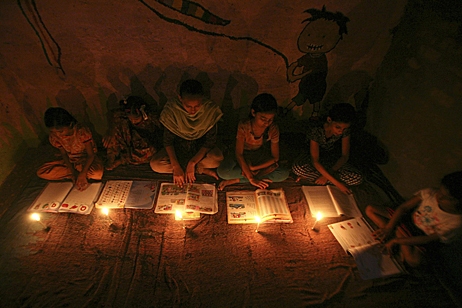
Although power generation has grown more than 100-fold since 1947, still good number of rural households across ( estimated at 4 crores) the country still have no electricity.
A village is considered electrified if
(i) electricity is provided in public places such as schools, panchayat offices, health centres, dispensaries and community centres the
(ii) number of households electrified should be at least 10% of the total number of households in the village
(ii) basic infrastructure such as Distribution Transformer and Distribution lines are provided in the inhabited locality as well as the Dalit Basti hamlet where it exists. This means that even if 90% of households have no electricity, the village shall be considered as electrified. Such parameters should change. Therefore government claims of 597,464 census villages, 596,883 villages (99.9%) have been electrified as of March 2018, does not stand in good stead.
Prime Minister Narendra Modi in September 2017 had launched Pradhan Mantri Sahaj Bijli Har Ghar Yojana ‘Saubhagya’ to provide electricity connections to over 4 crore families in rural and urban areas by December 2018. If the government is able to achieve this, it would take India one step ahead to realize the dream of becoming a developed nation. Electricity is one of the essential needs of mankind. It is one the important component for economic growth and sustainable industrial development. (Statistics source www.ddugjy.gov.in)
-Window To News
Although power generation has grown more than 100-fold since 1947, still good number of rural households across ( estimated at 4 crores) the country still have no electricity.
A village is considered electrified if
(i) electricity is provided in public places such as schools, panchayat offices, health centres, dispensaries and community centres the
(ii) number of households electrified should be at least 10% of the total number of households in the village
(ii) basic infrastructure such as Distribution Transformer and Distribution lines are provided in the inhabited locality as well as the Dalit Basti hamlet where it exists. This means that even if 90% of households have no electricity, the village shall be considered as electrified. Such parameters should change. Therefore government claims of 597,464 census villages, 596,883 villages (99.9%) have been electrified as of March 2018, does not stand in good stead.
Prime Minister Narendra Modi in September 2017 had launched Pradhan Mantri Sahaj Bijli Har Ghar Yojana ‘Saubhagya’ to provide electricity connections to over 4 crore families in rural and urban areas by December 2018. If the government is able to achieve this, it would take India one step ahead to realize the dream of becoming a developed nation. Electricity is one of the essential needs of mankind. It is one the important component for economic growth and sustainable industrial development. (Statistics source www.ddugjy.gov.in)
-Window To News