A review of Modi government’s four years foreign policy.
Saturday - May 26, 2018 12:26 pm ,
Category : WTN SPECIAL
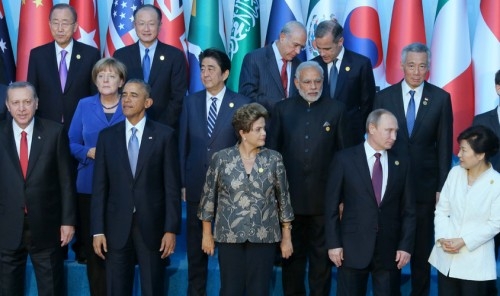
Modi and his foreign policy.
MAY 26(WTN) - Today, while four years of Modi Government have come to an end, it is necessary that we should also discuss about the foreign policy of Prime Minister Narendra Modi. The world's largest democracy India's foreign policy has been ‘distinct’ during different governments. From the country's first Prime Minister Jawaharlal Nehru to current Prime Minister Narendra Modi, the foreign policy has been in different views. Since Modi took oath as the prime minister of India, he has traveled to many countries of the world and has met every major leader of the world and tuning with these leaders of Modi has also been good. Let's look at how the Modi Government's foreign policy is finally over.
First of all, we talk about the ‘stronghold of terrorism’ Pakistan. Modi had called Pakistan's Prime Minister Nawaz Sharif in his swearing-in ceremony, and Modi himself has gone to Pakistan. But even then the relationship between the two countries is not normal. India's relations with Pakistan are stressful during the Modi regime. In order to kill the terrorist, the Modi government crossed the border and had ‘surgical strike’. Modi Government believes that unless Pakistan stops terrorism, no talks will be held between the two countries. Modi, repeatedly referring to the ‘surgical strike’ during election campaigning, gives a clear message to Pakistan that India can take any action against terrorism. In four years of Modi Government, India's relations with Pakistan are full of tension.
Relations with India's largest neighboring country China has been in ‘ups and downs’ mode. At the time of Doklam controversy, it was seemed as if the war between India and China could be ever. But the ‘discretion’ of Prime Minister Modi and China's President Xi Jinping ‘diluted’ the tension. Since recently there was an informal dialogue between Modi and Jinping, the tension on the border of India and China has been reduced. The military and economically powerful China from India is an expanding country and wants to establish itself as an ‘empire’ in Asia. But India is the biggest obstacle in fulfilling this dream. China, along with Pakistan, tries to put ‘pressure on India’, but India has not allowed China to succeed in its intentions with its diplomacy.
At the time of the Modi government, India's relations with the US have been ‘common’. Firstly, Modi has a good relationship with both Barack Obama and then Donald Trump. At the Republic day celebrations of 2015, Modi invited Obama as a guest and raised the hand of friendship towards America. But after the arrival of Trump, India's relations are ‘fluctuating’ with the US. The Modi government has objected to Trump's visa policy many times. But America, the most powerful country in the world, also knows that there is no sense in spoil the relationship with the world largest democracy India. That is why during the Modi government there has been an increase in ‘India's credibility’ in the US.
India and Russia have been good friends of each other for years. From the time of the Cold War, India has had good relations with Russia. But due to the growing friendship of India with USA, Russia makes a distance from India. Russia, a permanent Security Council member, has always supported India's permanent membership in the Security Council. There was an ‘informal discussion’ between Narendra Modi and Vladimir Putin, who recently took oath as President of the Russia fourth time, in Russia, so the message goes that relations in both countries are ‘normal’.
Other countries in the rest of the world, such as Britain, France, Germany, Japan, Australia and Israel have had a good relationship with the Modi government. On the other hand, in the SAARC countries, India has ‘little hold’ on these countries. While Nepal and Sri Lanka seem to be tilted towards China, China also has eyes on Bangladesh. In such a situation, the Modi government can be termed as ‘unsuccessful’ in terms of relations with the countries of SAARC. The Modi government has done a great job in Afghanistan, which should be appreciated. If the ‘content’ of the Modi government's foreign policy is extracted, then it seems that Modi himself has succeeded in making his and India’s ‘image’ in the world. But there is still a lot to be done in foreign policy.
MAY 26(WTN) - Today, while four years of Modi Government have come to an end, it is necessary that we should also discuss about the foreign policy of Prime Minister Narendra Modi. The world's largest democracy India's foreign policy has been ‘distinct’ during different governments. From the country's first Prime Minister Jawaharlal Nehru to current Prime Minister Narendra Modi, the foreign policy has been in different views. Since Modi took oath as the prime minister of India, he has traveled to many countries of the world and has met every major leader of the world and tuning with these leaders of Modi has also been good. Let's look at how the Modi Government's foreign policy is finally over.
First of all, we talk about the ‘stronghold of terrorism’ Pakistan. Modi had called Pakistan's Prime Minister Nawaz Sharif in his swearing-in ceremony, and Modi himself has gone to Pakistan. But even then the relationship between the two countries is not normal. India's relations with Pakistan are stressful during the Modi regime. In order to kill the terrorist, the Modi government crossed the border and had ‘surgical strike’. Modi Government believes that unless Pakistan stops terrorism, no talks will be held between the two countries. Modi, repeatedly referring to the ‘surgical strike’ during election campaigning, gives a clear message to Pakistan that India can take any action against terrorism. In four years of Modi Government, India's relations with Pakistan are full of tension.
Relations with India's largest neighboring country China has been in ‘ups and downs’ mode. At the time of Doklam controversy, it was seemed as if the war between India and China could be ever. But the ‘discretion’ of Prime Minister Modi and China's President Xi Jinping ‘diluted’ the tension. Since recently there was an informal dialogue between Modi and Jinping, the tension on the border of India and China has been reduced. The military and economically powerful China from India is an expanding country and wants to establish itself as an ‘empire’ in Asia. But India is the biggest obstacle in fulfilling this dream. China, along with Pakistan, tries to put ‘pressure on India’, but India has not allowed China to succeed in its intentions with its diplomacy.
At the time of the Modi government, India's relations with the US have been ‘common’. Firstly, Modi has a good relationship with both Barack Obama and then Donald Trump. At the Republic day celebrations of 2015, Modi invited Obama as a guest and raised the hand of friendship towards America. But after the arrival of Trump, India's relations are ‘fluctuating’ with the US. The Modi government has objected to Trump's visa policy many times. But America, the most powerful country in the world, also knows that there is no sense in spoil the relationship with the world largest democracy India. That is why during the Modi government there has been an increase in ‘India's credibility’ in the US.
India and Russia have been good friends of each other for years. From the time of the Cold War, India has had good relations with Russia. But due to the growing friendship of India with USA, Russia makes a distance from India. Russia, a permanent Security Council member, has always supported India's permanent membership in the Security Council. There was an ‘informal discussion’ between Narendra Modi and Vladimir Putin, who recently took oath as President of the Russia fourth time, in Russia, so the message goes that relations in both countries are ‘normal’.
Other countries in the rest of the world, such as Britain, France, Germany, Japan, Australia and Israel have had a good relationship with the Modi government. On the other hand, in the SAARC countries, India has ‘little hold’ on these countries. While Nepal and Sri Lanka seem to be tilted towards China, China also has eyes on Bangladesh. In such a situation, the Modi government can be termed as ‘unsuccessful’ in terms of relations with the countries of SAARC. The Modi government has done a great job in Afghanistan, which should be appreciated. If the ‘content’ of the Modi government's foreign policy is extracted, then it seems that Modi himself has succeeded in making his and India’s ‘image’ in the world. But there is still a lot to be done in foreign policy.