Rain mayhem in north India reminds of an ominous past
Wednesday - September 26, 2018 9:49 am ,
Category : WTN SPECIAL
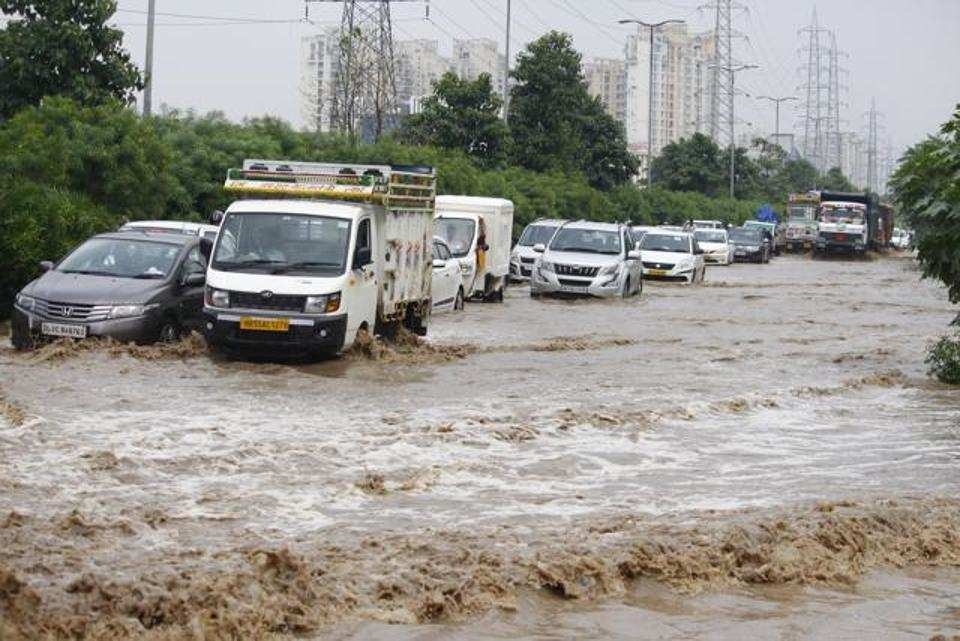
WTN- Heavy rains are pounding Jammu, Himachal and Punjab even as the death toll is rising. Several of IIT students from Rourkee on a tour to Lahaul and Spiti are reported missing.
A Volvo bus carrying passengers have been washed away while several trucks have drowned in fuming rivers. Landslides have hampered road connectivity while food, power and water are in short supply. Several trains stand cancelled.
The dams have opened their gates and there is threat of flooding in the downstream areas. Punjab is on red-alert. Schools and colleges have been closed. Had this been in Mumbai, the news would have gained more currency, but the situation is not much different than the Mumbai flooding in 2005.
The logistics and infrastructure are crumbling under rain pressure. This is an old story in the Indian context. Despite all our development strides, any minor natural calamity throws us off gear.
People die like insects and every social parameter is set back by decades, exposing our poor construction and ill-preparedness to face exigencies. Buildings collapse, rail tracks collapse, bridges collapse, roads break, dams break – virtually anything can happen even if it rains for a couple of days. Rain is a very natural, commonplace and innocuous phenomenon in any part of the world and India is too well used to it. Yet, despite repeated havocs caused by rains, we don’t learn and fail to put up a permanent system in place that can minimise damage to life and property.
Call it lack of accountability, call it corruption and insincerity, call it poor man management and lack of vision— call it a combination of all these, or call it what you will, but the end result is suffering and ignominy. Not only lives are lost but in calamities the whole economy gets derailed that needs eons to get back on track. Only a little planning beforehand and keeping the house in order can change things drastically for India. It points towards administrative failure in the states to be unable to gauge the impact of an incoming threat and get ready for the same.
Apart, such sudden bouts of intense rains and their increasing frequency also point towards a major shift in the climatic pattern of the region, which too has much to do with unregulated human activities on the hills and in the forests that have damaged the ecosystem irrevocably. Unbridled construction and timber felling have weakened the hills, changed the flora and fauna mapping and made human life more vulnerable and fragile. Natural aberrations like heavy rains or storms are ever more damaging today as populations have increased multiple times and infiltrated inside natural ecosystems, weakening their functioning and recharging abilities.
Unless humans learn to tame their greed and exercise caution and restraint in their fad for development at the cost of environment, we will have more disastrous natural occurrences and their more disastrous consequences. We are to blame ourselves for our debacle. Environment is never a priority in our lives. Environment is taking its revenge.
-Window To News
A Volvo bus carrying passengers have been washed away while several trucks have drowned in fuming rivers. Landslides have hampered road connectivity while food, power and water are in short supply. Several trains stand cancelled.
The dams have opened their gates and there is threat of flooding in the downstream areas. Punjab is on red-alert. Schools and colleges have been closed. Had this been in Mumbai, the news would have gained more currency, but the situation is not much different than the Mumbai flooding in 2005.
The logistics and infrastructure are crumbling under rain pressure. This is an old story in the Indian context. Despite all our development strides, any minor natural calamity throws us off gear.
People die like insects and every social parameter is set back by decades, exposing our poor construction and ill-preparedness to face exigencies. Buildings collapse, rail tracks collapse, bridges collapse, roads break, dams break – virtually anything can happen even if it rains for a couple of days. Rain is a very natural, commonplace and innocuous phenomenon in any part of the world and India is too well used to it. Yet, despite repeated havocs caused by rains, we don’t learn and fail to put up a permanent system in place that can minimise damage to life and property.
Call it lack of accountability, call it corruption and insincerity, call it poor man management and lack of vision— call it a combination of all these, or call it what you will, but the end result is suffering and ignominy. Not only lives are lost but in calamities the whole economy gets derailed that needs eons to get back on track. Only a little planning beforehand and keeping the house in order can change things drastically for India. It points towards administrative failure in the states to be unable to gauge the impact of an incoming threat and get ready for the same.
Apart, such sudden bouts of intense rains and their increasing frequency also point towards a major shift in the climatic pattern of the region, which too has much to do with unregulated human activities on the hills and in the forests that have damaged the ecosystem irrevocably. Unbridled construction and timber felling have weakened the hills, changed the flora and fauna mapping and made human life more vulnerable and fragile. Natural aberrations like heavy rains or storms are ever more damaging today as populations have increased multiple times and infiltrated inside natural ecosystems, weakening their functioning and recharging abilities.
Unless humans learn to tame their greed and exercise caution and restraint in their fad for development at the cost of environment, we will have more disastrous natural occurrences and their more disastrous consequences. We are to blame ourselves for our debacle. Environment is never a priority in our lives. Environment is taking its revenge.
-Window To News