Fasting and religious faith
Monday - October 15, 2018 9:52 am ,
Category : WTN SPECIAL
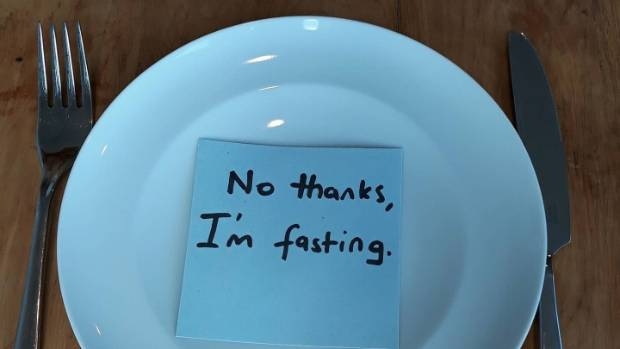
WTN- No one can identify when fasting came to be associated with religion and sacred beliefs. Perhaps it became a popular notion of piousness and religious sanctimony in the 17th or 18th centuries but one cannot confirm why it was adopted and how it helps in religious progression. Some say, Hinduism most probably borrowed this practice from other extinct religions and rare texts that referred to the practice of willful abstention from food or certain food types as holy.
However, one can never confirm these truths of antiquity as they don’t have a proof of their origin. A practice, especially one that is associated with religion, whether regressive or progressive, is a tradition, that is revered, valued and adopted by a large multitude of the populace and hence needs the respect and validity it merits. But if we see the pros or cons of fasting, the scale will be balanced on both sides. While the propagators and proponents of fasting will always have ample reasons to support their claim, there would be another group to come out against fasting as a healthy way. Nutritionists and dieticians say that fasting for long hours is not good for health.
Though partial fasting or fasting for short duration is sometimes touted healthy for metabolic rejuvenation, long fasting and complete fast is not something very highly appreciated by the medical fraternity. Doctors say that due to fasting the body gets exhausted and deficient of vital nutrients that can prove detrimental to health.
Not everyone is suited to observe fast and one’s medical and health parameters are often not taken into consideration while fasting. A healthy and plump person may have a different reaction compared to a lanky or thin body doing the same fasting.
During navaratra fasting, the intake of fluids reduces drastically in the observer of the fast and this damage cells. If a person is bent on fasting, doctors say, they must choose their duration and food variants wisely so that the replenishment doesn’t suffer. Indian women are largely anemic and underweight, due to which it becomes all the more important to keep the food intake ideal and adequate, since it is mostly women who keep fast in festivals here.
The sabudana / falahari khichdi which many fasters eat once a day in the 9-day period can be substituted by more fluid intake or dry fruits and different kinds of food varieties that provide the nutrients in adequate supply and don’t keep the body deprived for long of the essential supplies that keep it fit and moving. Fasting, if one’s religion necessitates it, can be followed but judiciously and not at the cost of one’s health and long term implications. No religion promotes self annihilation or torture, unless one takes a vow of monkhood.
For common citizens, dharma doesn’t consist just of propitiating the gods but also to sustain one’s being for the welfare of the family and honour the commitments towards family and social life. If religious practices somewhere affect these duties, then those practices need to be revisited or modulated for practical purposes.
-Window To News
However, one can never confirm these truths of antiquity as they don’t have a proof of their origin. A practice, especially one that is associated with religion, whether regressive or progressive, is a tradition, that is revered, valued and adopted by a large multitude of the populace and hence needs the respect and validity it merits. But if we see the pros or cons of fasting, the scale will be balanced on both sides. While the propagators and proponents of fasting will always have ample reasons to support their claim, there would be another group to come out against fasting as a healthy way. Nutritionists and dieticians say that fasting for long hours is not good for health.
Though partial fasting or fasting for short duration is sometimes touted healthy for metabolic rejuvenation, long fasting and complete fast is not something very highly appreciated by the medical fraternity. Doctors say that due to fasting the body gets exhausted and deficient of vital nutrients that can prove detrimental to health.
Not everyone is suited to observe fast and one’s medical and health parameters are often not taken into consideration while fasting. A healthy and plump person may have a different reaction compared to a lanky or thin body doing the same fasting.
During navaratra fasting, the intake of fluids reduces drastically in the observer of the fast and this damage cells. If a person is bent on fasting, doctors say, they must choose their duration and food variants wisely so that the replenishment doesn’t suffer. Indian women are largely anemic and underweight, due to which it becomes all the more important to keep the food intake ideal and adequate, since it is mostly women who keep fast in festivals here.
The sabudana / falahari khichdi which many fasters eat once a day in the 9-day period can be substituted by more fluid intake or dry fruits and different kinds of food varieties that provide the nutrients in adequate supply and don’t keep the body deprived for long of the essential supplies that keep it fit and moving. Fasting, if one’s religion necessitates it, can be followed but judiciously and not at the cost of one’s health and long term implications. No religion promotes self annihilation or torture, unless one takes a vow of monkhood.
For common citizens, dharma doesn’t consist just of propitiating the gods but also to sustain one’s being for the welfare of the family and honour the commitments towards family and social life. If religious practices somewhere affect these duties, then those practices need to be revisited or modulated for practical purposes.
-Window To News