On tiger trail to Ranthambore
Tuesday - February 26, 2019 12:32 pm ,
Category : WTN SPECIAL
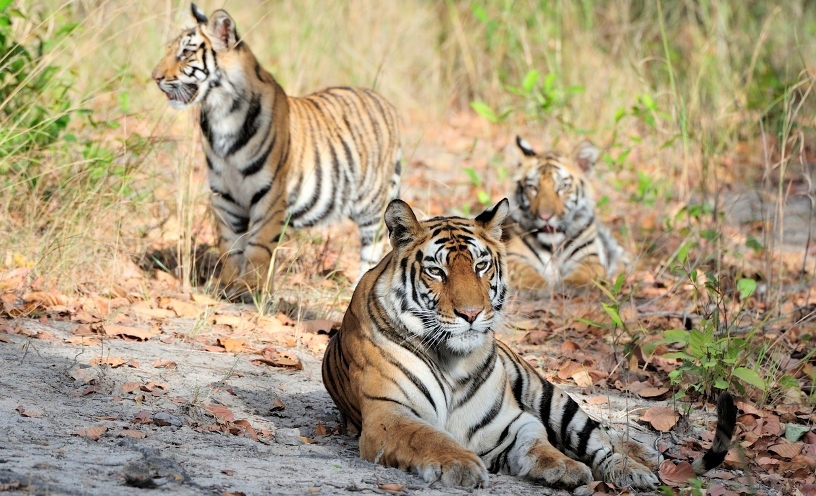
(WTN)- Known for its forts and palaces, Rajasthan is also home to one of the largest and most famous national parks of India, which spreads across 390 sq kms and houses the grand 10th century Ranthambore fort towering 700 ft above the surrounding wilderness atop a rocky projection. So it is a delightful treat on offer for both the naturalist and the historian. Ranthambore started as Sawai Madhopor game sanctuary way back in 1955 and it was only in 1980 that it was declared a full-fledged national park. Later in 1991, the adjacent Sawai Man Singh Sanctuary and Keladevi Sanctuary were included in the area to form the tiger reserve.
Ranthambore national park, which lies on the edge of a plateau, is bound by the Banas River in the north and Chambal River in the south. The topography ranges from an altitude of 200 to over 500 mtrs, adding variety to the landscape. The best season to visit the park is between November and April while it is closed to visitors in the monsoon months. The rich flora of the national park contains no less than 500 species of flowering plants while deciduous forests with extensive patches of grasslands form the major ecological pattern of the park, which has also a number of water bodies to complete the system ideal for a variety of animal species, including the tiger.
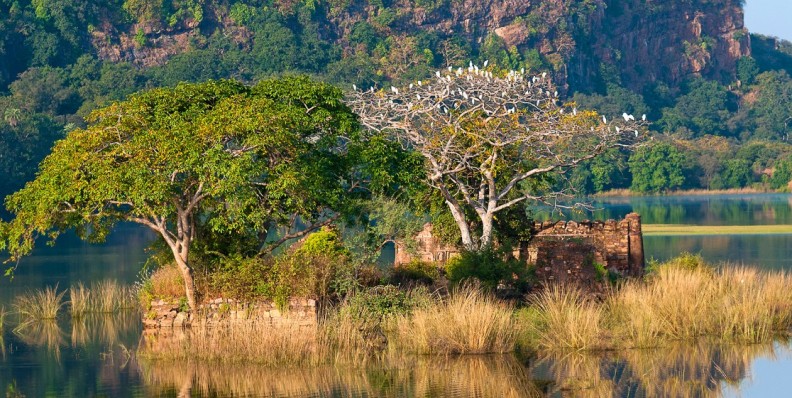
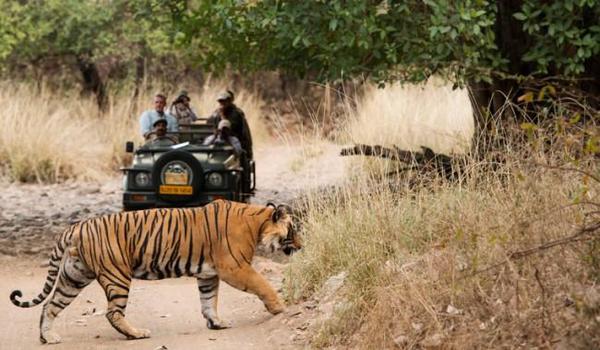
The Padam Talao is the largest of such lakes that is flanked by the red sandstone Jogi Mahal. A giant banyan tree, considered the second largest in India is also beside the lake, which is a big tourist draw. As per the 2014 census, there are no less than 62 tigers in the park. Apart from the tiger, Ranthambore is also known for animals like the leopard, wild boar, striped hyena, sloth bear, southern plains gray langur, rhesus macaque and chital. The best way to scan and scour Ranthambore is to take the safari ride available from inside the park. While there are open top mini buses which seat 20, there is also an option of taking a 6-seater gypsy for the 3-hr ride. Each ride costs Rs 700-800 per person.
The safaris start at 6.30 in the morning and 2.30 in the afternoon. And the good thing is tiger spotting is not infrequent in the forest area because of the existence of multiple water bodies and large grasslands that accommodate tigers best. Ranthambore can be reached from Sawai Madhopor railway station, which is just 11kms from the park. Perhaps a better option to reach the national park is to take the mega highway from Kota, which is 110 kms away and can be covered in less than 1.5 hrs.
Trains also connect Kota with Sawai Madhopor. Apart, from Jaipur too one can take a bus, a cab or a train for the 160km journey to Ranthambore. From Delhi, Ranthambore is about 350kms and takes about 5hrs by road. There are several hotels and resorts of all budgets and genres dotting the road from Sawai Madhopor to Ranthambore and visitors are spoilt for choice. – Window To News