Should the face veiling be banned in India in terms of security point of view?
Wednesday - May 1, 2019 1:31 pm ,
Category : WTN SPECIAL
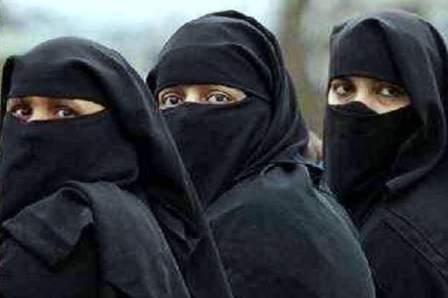
Discussion of restriction on the Burqa started in India
On the basis of Sri Lanka, Shiv Sena demands a ban on the Burqa in India
May 01 (WTN) - The Burqa is once again in the discussions. As you know, after the bomb explosion in Sri Lanka in the last week, the Sri Lankan Government has banned 'face covering' till the upcoming order, which includes the Burqa. After banning the Burqa in Sri Lanka, now Shiv Sena has demanded a ban on the Burqa in India too. By keeping such demands in its mouthpiece newspaper Samna’s editorial, Shiv Sena has demanded Prime Minister Narendra Modi to ban 'Burqa' or 'Naqab' in the country. Quoting Prime Minister Narendra Modi's Ayodhya tour, the editorial states, “what has happened in Ravana’s Lanka when same will happen in Ram’s Ayodhya?"
While praising Sri Lankan President Maithripala Sirisena, BJP's ally Shiv Sena has mentioned about this demand in national interest and has also mentioned about France, New Zealand, Britain and Australia like countries in this regard and has written, "If these countries of the world can take the decision to ban the Burqa on the terrorist attacks, why can’t India?".In addition to Shiv Sena, the Hindu Sena has written to the Home Ministry by demanding that to stop terrorist attacks, on the basis of Sri Lanka, the Burqa and 'Naqab should completely be banned in the public places as well as in the public and the private institutions.
As you know, restrictions on face covering in Sri Lanka have been imposed after the serial bombings on the occasion of Easter (April 21). There is a ban to cover face anyhow in Sri Lanka now. Although this decision has been taken under 'Emergency Law', which is not permanent. For your information, let you know that the word 'Burqa' or 'Naqab' has not been used in Sri Lankan President's order.
The Sri Lanka Government's decision to ban the face covering in Sri Lanka has also got some Muslim clerics togetherness. According to Fazil Farooq, spokesman of Jamiatul Ulama in Sri Lanka says that as to cooperate with the security agencies, we have allowed the people to come out without face covering. But at the same time, some Islamic scholars from Sri Lanka say that they support the ban of face covering for a short time, but they oppose any legal order against Burqa. At the same time, many international organizations related to human rights have criticized the move of the Sri Lankan Government.
After the 'temporary ban' of covering the face in Sri Lanka, there is a same demand in India that such restrictions should be imposed here too. It is being argued that by covering the face, terrorists can hide their identity before CCTV cameras and other monitoring measures. After the face covering ban in Sri Lanka, there is a demand in India to impose ban in face covering including the Burqa and the Naqab. By doing this, the terrorist activity in India can be stopped.
But it does not seem that it will be possible due to politics in India. First, if there is a huge Muslim population in India, then in such a way, they will oppose the ban on face covering in any way because it will have restrictions on Burqa and Naqab. On the other hand, due to sunlight, dust and pollution in India, men also cover face with women. In such a country, it is natural to have a firm opposition to the order to ban the face covering in a country like India. There has also been opposition of wearing a Burqa at the time of voting in the elections, in such a way that the demand for a ban on Burqa or face covering in India is far away from ground realities.
In countries where citizens and political parties are aware, such restrictions can be imposed. In India, the citizens and political parties here are not so conscious that they can 'easily accept' the restriction of covering the face. If the Government imposes a ban on the face covering for the security, political parties and religious organizations will strongly oppose it because everyone in India has their own 'selfishness'.
May 01 (WTN) - The Burqa is once again in the discussions. As you know, after the bomb explosion in Sri Lanka in the last week, the Sri Lankan Government has banned 'face covering' till the upcoming order, which includes the Burqa. After banning the Burqa in Sri Lanka, now Shiv Sena has demanded a ban on the Burqa in India too. By keeping such demands in its mouthpiece newspaper Samna’s editorial, Shiv Sena has demanded Prime Minister Narendra Modi to ban 'Burqa' or 'Naqab' in the country. Quoting Prime Minister Narendra Modi's Ayodhya tour, the editorial states, “what has happened in Ravana’s Lanka when same will happen in Ram’s Ayodhya?"
While praising Sri Lankan President Maithripala Sirisena, BJP's ally Shiv Sena has mentioned about this demand in national interest and has also mentioned about France, New Zealand, Britain and Australia like countries in this regard and has written, "If these countries of the world can take the decision to ban the Burqa on the terrorist attacks, why can’t India?".In addition to Shiv Sena, the Hindu Sena has written to the Home Ministry by demanding that to stop terrorist attacks, on the basis of Sri Lanka, the Burqa and 'Naqab should completely be banned in the public places as well as in the public and the private institutions.
As you know, restrictions on face covering in Sri Lanka have been imposed after the serial bombings on the occasion of Easter (April 21). There is a ban to cover face anyhow in Sri Lanka now. Although this decision has been taken under 'Emergency Law', which is not permanent. For your information, let you know that the word 'Burqa' or 'Naqab' has not been used in Sri Lankan President's order.
The Sri Lanka Government's decision to ban the face covering in Sri Lanka has also got some Muslim clerics togetherness. According to Fazil Farooq, spokesman of Jamiatul Ulama in Sri Lanka says that as to cooperate with the security agencies, we have allowed the people to come out without face covering. But at the same time, some Islamic scholars from Sri Lanka say that they support the ban of face covering for a short time, but they oppose any legal order against Burqa. At the same time, many international organizations related to human rights have criticized the move of the Sri Lankan Government.
After the 'temporary ban' of covering the face in Sri Lanka, there is a same demand in India that such restrictions should be imposed here too. It is being argued that by covering the face, terrorists can hide their identity before CCTV cameras and other monitoring measures. After the face covering ban in Sri Lanka, there is a demand in India to impose ban in face covering including the Burqa and the Naqab. By doing this, the terrorist activity in India can be stopped.
But it does not seem that it will be possible due to politics in India. First, if there is a huge Muslim population in India, then in such a way, they will oppose the ban on face covering in any way because it will have restrictions on Burqa and Naqab. On the other hand, due to sunlight, dust and pollution in India, men also cover face with women. In such a country, it is natural to have a firm opposition to the order to ban the face covering in a country like India. There has also been opposition of wearing a Burqa at the time of voting in the elections, in such a way that the demand for a ban on Burqa or face covering in India is far away from ground realities.
In countries where citizens and political parties are aware, such restrictions can be imposed. In India, the citizens and political parties here are not so conscious that they can 'easily accept' the restriction of covering the face. If the Government imposes a ban on the face covering for the security, political parties and religious organizations will strongly oppose it because everyone in India has their own 'selfishness'.