Maharashtra's current political drama may be 'trapped' in the anti-defection law!
Saturday - November 23, 2019 12:10 pm ,
Category : WTN SPECIAL
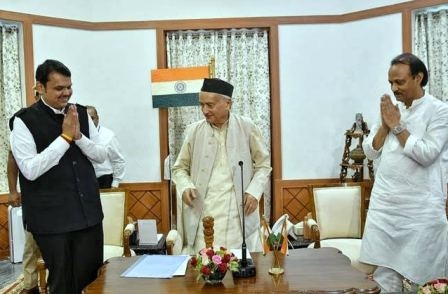
NCP may go to court against some of its MLAs including Ajit Pawar
Devendra Fadnavis' government looks in 'crisis' under anti-defection law!
NOV 23 (WTN) - Nothing is ever impossible in the politics of India, and the biggest example of this is the current political development of Maharashtra, which has shocked everyone. As you know, there has been a big upswing in the politics of Maharashtra, in which the BJP, which emerged as the largest single party in Maharashtra Assembly elections have formed a government with a ‘section’ of the Nationalist Congress Party. In a sudden political change, Maharashtra Governor Bhagat Singh Koshyari administered the oath of office to the BJP's Devendra Fadnavis as Chief Minister. At the same time, NCP leader Ajit Pawar, who took oath along with Devendra Fadnavis, has been made Deputy Chief Minister of this coalition government.
According to the information, Sharad Pawar's nephew Ajit Pawar has the support of 20 to 25 MLAs of NCP. On Ajit Pawar becoming the Deputy Chief Minister, Nationalist Congress Party President Sharad Pawar has made it clear that he is unaware of the current political developments, and whatever decision Ajit Pawar has taken is taken from his will. However, Ajit Pawar says that he had already told Sharad Pawar about his ‘possible’ political move.
By the way, it is known that Sharad Pawar is the supremo in the Nationalist Congress Party and any political decision is taken by the NCP on his own accord. In such a situation, while Ajit Pawar has formed a government with the BJP by supporting some NCP MLAs, the question arises whether the Nationalist Congress Party will lodge a protest on this?
Now the question arises that if the NCP goes to court after fearing the breakup of the MLAs, can this case also be turned into anti-defection law like Karnataka? For your information, let us know that according to the current anti-defection law if the members of one party want to go with the other party, at least two-thirds of the members of the first party must agree. The NCP has won 54 seats in the recently held Maharashtra assembly elections.
According to the current anti-defection law, if Ajit Pawar is to form a government with the BJP, then the support of two-thirds of the NCP i.e. 41 MLAs will be required. But it is being said that only about 20 to 25 MLAs of NCP have claimed support to the BJP Government, in such a situation, that the formation of government in Maharashtra may be challenged in the court.
The current ani-defection law is in the Tenth Schedule to the Indian Constitution. The anti-defection law was incorporated into the constitution after the 52nd Constitutional Amendment in 1985. In fact, the need for anti-defection law was felt when MPs and MLAs used to go away from the party line to support any government or party for political gains, and as such, there was increasing insensitivity and instability in politics.
For all these reasons, the Constitution was amended to introduce anti-defection law. According to this law, if any member votes in a House against a party whip; if a member resigns on his own will; after winning the election; if an Independent joins any party or if a nominated member subscribes to any party, then his/her membership of the House will be terminated.
However, even after the enactment of the law in the year 1985, the defection of MPs and MLAs could not control much. After this, in the year 2003, it was decided that if not only one person, even MPs or MLAs collectively change parties, and then it will be declared as unconstitutional. Along with this, Section 3 of this law was also abolished in the same amendment. Under this section, one-third of the members of any party could change parties. But now to change the party, consent of at least two-thirds of the party members is required.
It is clear from the current political situation in Maharashtra that if Ajit Pawar, along with 20 to 25 MLAs of NCP supported the BJP Government, then it is unconstitutional according to the anti-defection law. Now it has to be seen that what steps Sharad Pawar's party NCP takes on the attitude of Ajit Pawar and his NCP-backed MLAs? By the way, Ajit Pawar claims that whatever political steps he has taken, he has given all information to Sharad Pawar, in such a situation, now it will have to be seen what the big players of Maharashtra politics Sharad Pawar say and do.
NOV 23 (WTN) - Nothing is ever impossible in the politics of India, and the biggest example of this is the current political development of Maharashtra, which has shocked everyone. As you know, there has been a big upswing in the politics of Maharashtra, in which the BJP, which emerged as the largest single party in Maharashtra Assembly elections have formed a government with a ‘section’ of the Nationalist Congress Party. In a sudden political change, Maharashtra Governor Bhagat Singh Koshyari administered the oath of office to the BJP's Devendra Fadnavis as Chief Minister. At the same time, NCP leader Ajit Pawar, who took oath along with Devendra Fadnavis, has been made Deputy Chief Minister of this coalition government.
According to the information, Sharad Pawar's nephew Ajit Pawar has the support of 20 to 25 MLAs of NCP. On Ajit Pawar becoming the Deputy Chief Minister, Nationalist Congress Party President Sharad Pawar has made it clear that he is unaware of the current political developments, and whatever decision Ajit Pawar has taken is taken from his will. However, Ajit Pawar says that he had already told Sharad Pawar about his ‘possible’ political move.
By the way, it is known that Sharad Pawar is the supremo in the Nationalist Congress Party and any political decision is taken by the NCP on his own accord. In such a situation, while Ajit Pawar has formed a government with the BJP by supporting some NCP MLAs, the question arises whether the Nationalist Congress Party will lodge a protest on this?
Now the question arises that if the NCP goes to court after fearing the breakup of the MLAs, can this case also be turned into anti-defection law like Karnataka? For your information, let us know that according to the current anti-defection law if the members of one party want to go with the other party, at least two-thirds of the members of the first party must agree. The NCP has won 54 seats in the recently held Maharashtra assembly elections.
According to the current anti-defection law, if Ajit Pawar is to form a government with the BJP, then the support of two-thirds of the NCP i.e. 41 MLAs will be required. But it is being said that only about 20 to 25 MLAs of NCP have claimed support to the BJP Government, in such a situation, that the formation of government in Maharashtra may be challenged in the court.
The current ani-defection law is in the Tenth Schedule to the Indian Constitution. The anti-defection law was incorporated into the constitution after the 52nd Constitutional Amendment in 1985. In fact, the need for anti-defection law was felt when MPs and MLAs used to go away from the party line to support any government or party for political gains, and as such, there was increasing insensitivity and instability in politics.
For all these reasons, the Constitution was amended to introduce anti-defection law. According to this law, if any member votes in a House against a party whip; if a member resigns on his own will; after winning the election; if an Independent joins any party or if a nominated member subscribes to any party, then his/her membership of the House will be terminated.
However, even after the enactment of the law in the year 1985, the defection of MPs and MLAs could not control much. After this, in the year 2003, it was decided that if not only one person, even MPs or MLAs collectively change parties, and then it will be declared as unconstitutional. Along with this, Section 3 of this law was also abolished in the same amendment. Under this section, one-third of the members of any party could change parties. But now to change the party, consent of at least two-thirds of the party members is required.
It is clear from the current political situation in Maharashtra that if Ajit Pawar, along with 20 to 25 MLAs of NCP supported the BJP Government, then it is unconstitutional according to the anti-defection law. Now it has to be seen that what steps Sharad Pawar's party NCP takes on the attitude of Ajit Pawar and his NCP-backed MLAs? By the way, Ajit Pawar claims that whatever political steps he has taken, he has given all information to Sharad Pawar, in such a situation, now it will have to be seen what the big players of Maharashtra politics Sharad Pawar say and do.