Property can be seized if public or government property damaged
Monday - December 23, 2019 2:42 pm ,
Category : WTN SPECIAL
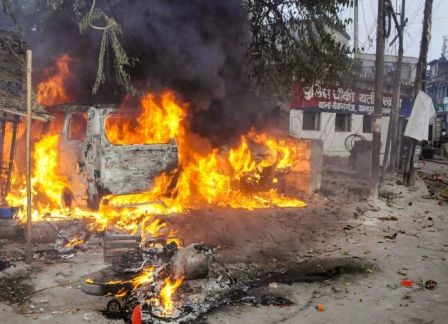
The violent protest may be costly to you
The law sets 'strictness' related to the loss of public property; the accused has to prove himself 'innocent'
DEC 23 (WTN) - It is normal for protests by political parties and their allies in India, the world's largest democracy and the world's second-largest population. But it has been observed that many times violent activities are carried out by the crowd at the time of protests, due to which there is considerable damage to public and government property. As you know, opposition parties protested in many parts of the country in protest against the Citizenship Amendment Act, in which protests in many cities turned into violent protests, causing public and government property in many states was damaged.
After the violent protests against the Citizenship Amendment Act, Uttar Pradesh Chief Minister Yogi Adityanath expressed displeasure over the violent protests and took a strong stance, saying that the rioters who committed the violence would be identified and strict action would be taken against them. And the property of rioters, who damage public and government property will be confiscated. Indeed, it is often seen that public and government property are targeted in the protests. But for your information, let us know that in order to compensate for the loss of public and government property in the protests, the government can recover the cost from the nuisances according to the law and can also confiscate their property for this.
For your information, let you know that according to the provisions of the Prevention of Damage to Public Property Act, 1984, if a person is found guilty of causing damage to the government or public property, he can be punished for 5 years and also with a fine. On the other hand, if one found guilty in such cases so both the punishment and the fine can be imposed together. According to this law, a person accused of causing damage to public and government property cannot get bail unless he has recovered 50 percent of the loss.
The Prevention of Damage to Public Property Act, 1984 is a central law. Apart from this, different states have made their own laws in this regard. For your information, let us know that the issue of entry of women to the Sabarimala temple had raised a lot in Kerala recently. There were violent protests in the state in which public and government property were severely damaged. To deal with this, the Kerala Government came up with a new bill, in which the loss of public property is treated as equal to the loss of public or government property.
Let you know that the law of the state of Kerala states that in this case, the accused cannot get bail unless 100 percent of the property lost cannot be recovered from the accused. At the same time, there is a provision in the central law that for bail, the accused will have to compensate at least 50 percent of the property lost. The central law describes in detail in section 425 of the Indian Penal Code what kind of penalty and punishment will be awarded for loss of public and government property.
At the same time, the Supreme Court has also issued guidelines regarding the loss of public property. In 2007, the Supreme Court took Suo Motu cognizance of reports of severe loss of public property, as there was considerable loss of public and government property in protests and strikes that year. For your information, let us know that the Supreme Court had made two committees to change the law in this regard and the head of these committees was former Supreme Court Judge K.T. Thomas and senior lawyers Fali Nariman were made. On the advice of these two committees, in the year 2009, the Supreme Court issued some guidelines regarding government and public property.
The Supreme Court stated in its guidelines that in the event of loss of the public property, all the responsibility would be laid on the accused of the loss. According to the guidelines, if there is a loss of public property, the court assumes that the accused of the loss is responsible and in this case the accused has to prove him/her self innocent. According to the guidelines, the court considers him/her responsible until proven innocent. At the same time, the Nariman Committee said that in such cases the loss of public property should be recovered from the rioters.
By the way, it is very difficult to recover the loss of government property in protests. There was a lot of loss of public property in the Patidar movement in Gujarat. For the loss of public property, the state government accused Hardik Patel of the loss. But Hardik Patel's lawyer succeeded in proving in the Supreme Court that there is no evidence that violence spread in the Patidar movement only at the behest of Hardik Patel. For this reason, there was no recovery from Hardik Patel.
However, we advise you to avoid damaging public and government property during any kind of protest, because if the police video graphy or CCTV footage proves that you have damaged property during the protest so as per the law you can be fined to compensate for the damage. So it would be better to demonstrate your protest peacefully during protests.
DEC 23 (WTN) - It is normal for protests by political parties and their allies in India, the world's largest democracy and the world's second-largest population. But it has been observed that many times violent activities are carried out by the crowd at the time of protests, due to which there is considerable damage to public and government property. As you know, opposition parties protested in many parts of the country in protest against the Citizenship Amendment Act, in which protests in many cities turned into violent protests, causing public and government property in many states was damaged.
After the violent protests against the Citizenship Amendment Act, Uttar Pradesh Chief Minister Yogi Adityanath expressed displeasure over the violent protests and took a strong stance, saying that the rioters who committed the violence would be identified and strict action would be taken against them. And the property of rioters, who damage public and government property will be confiscated. Indeed, it is often seen that public and government property are targeted in the protests. But for your information, let us know that in order to compensate for the loss of public and government property in the protests, the government can recover the cost from the nuisances according to the law and can also confiscate their property for this.
For your information, let you know that according to the provisions of the Prevention of Damage to Public Property Act, 1984, if a person is found guilty of causing damage to the government or public property, he can be punished for 5 years and also with a fine. On the other hand, if one found guilty in such cases so both the punishment and the fine can be imposed together. According to this law, a person accused of causing damage to public and government property cannot get bail unless he has recovered 50 percent of the loss.
The Prevention of Damage to Public Property Act, 1984 is a central law. Apart from this, different states have made their own laws in this regard. For your information, let us know that the issue of entry of women to the Sabarimala temple had raised a lot in Kerala recently. There were violent protests in the state in which public and government property were severely damaged. To deal with this, the Kerala Government came up with a new bill, in which the loss of public property is treated as equal to the loss of public or government property.
Let you know that the law of the state of Kerala states that in this case, the accused cannot get bail unless 100 percent of the property lost cannot be recovered from the accused. At the same time, there is a provision in the central law that for bail, the accused will have to compensate at least 50 percent of the property lost. The central law describes in detail in section 425 of the Indian Penal Code what kind of penalty and punishment will be awarded for loss of public and government property.
At the same time, the Supreme Court has also issued guidelines regarding the loss of public property. In 2007, the Supreme Court took Suo Motu cognizance of reports of severe loss of public property, as there was considerable loss of public and government property in protests and strikes that year. For your information, let us know that the Supreme Court had made two committees to change the law in this regard and the head of these committees was former Supreme Court Judge K.T. Thomas and senior lawyers Fali Nariman were made. On the advice of these two committees, in the year 2009, the Supreme Court issued some guidelines regarding government and public property.
The Supreme Court stated in its guidelines that in the event of loss of the public property, all the responsibility would be laid on the accused of the loss. According to the guidelines, if there is a loss of public property, the court assumes that the accused of the loss is responsible and in this case the accused has to prove him/her self innocent. According to the guidelines, the court considers him/her responsible until proven innocent. At the same time, the Nariman Committee said that in such cases the loss of public property should be recovered from the rioters.
By the way, it is very difficult to recover the loss of government property in protests. There was a lot of loss of public property in the Patidar movement in Gujarat. For the loss of public property, the state government accused Hardik Patel of the loss. But Hardik Patel's lawyer succeeded in proving in the Supreme Court that there is no evidence that violence spread in the Patidar movement only at the behest of Hardik Patel. For this reason, there was no recovery from Hardik Patel.
However, we advise you to avoid damaging public and government property during any kind of protest, because if the police video graphy or CCTV footage proves that you have damaged property during the protest so as per the law you can be fined to compensate for the damage. So it would be better to demonstrate your protest peacefully during protests.