UV rays can prove effective in sanitizing Coronavirus
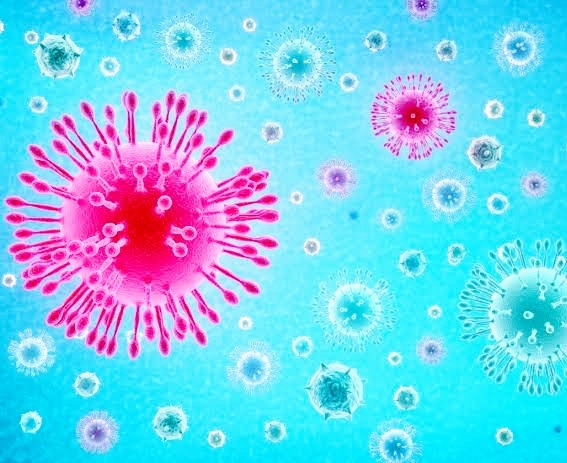
Research continues to find the vaccine for Coronavirus infection, doctors and scientists working to eliminate the infection
APRIL 16 (WTN) - Coronavirus infection is the biggest challenge for human civilization at this time. The disease of Coronavirus infection, which originated and spread from Wuhan city of China, has spread to more than 200 countries. At the time of writing this article, 1,35,239 people have died across the world due to the Coronavirus infection. As you know, doctors, scientists, and many researchers are engaged in finding the vaccine for Coronavirus infection to treat Coronavirus infection all over the world.
The work is going on a war footing all over the world on the discovery of the vaccine of Coronavirus infection disease. At the same time, there is continuous research on how the Coronavirus can be eradicated on air, water, and all surfaces. For your information, let us know that researchers at the Solid State Lighting and Energy Electronic Center (SSLEEC) of Santa Barbara are working to create an LED that can transition all surfaces, including air and water, from SARS COV-2. Explain that researchers have high expectations from ultraviolet (UV) LEDs.
Christian Zolner, involved in this research, has been working on the technique used in the sanitation and purification process for a long time. In this regard, he says that ultraviolet disinfection products are already being used in the medical field, but now the research on the power to neutralize the novel Coronavirus with ultraviolet light is going on these days.
For your information, let us know that the technique of infection free from ultraviolet light is already being used. While the use of this technology has not yet been proven to be widespread in the case of SARS COV-2, but according to a subsidiary of SSLEEC, ultraviolet LED products can cause 99.9 percent disinfection of the Coronavirus in just 30 seconds.
As you may be aware, there are many types of ultraviolet light. Of these, UV-A and UV-B come from the rays coming from the sun. Whereas UV-C is made from man-made devices. According to the researchers, the high-level UV-C LED comes from applying a form of silicon carbide to the surface of aluminum gallium nitride. According to experts, this type of technology is commonly used in water purifiers. Researchers believe that UV-C LED technology can be a game changer in a campaign to provide clean water to people.
According to Pro.Jollner, this technique can also be linked to a system that works only when there is no one around. Pro. Jolner says that it will be easier to clean water in public places also cheaply, without any chemical. For this reason, it can also prove to be a game changer in the case of COVID-19. Jollner's partners are currently focusing on producing affordable and accurate UV-C light emitters.
By the way, for your information, let us know that UV-C rays are harmful to humans. These rays can cause damage to human skin and eyes. These rays of 260–285 nanometer range are currently being used in disinfection technology. Well, in controlled conditions, where the possibility of human exposure to these rays is completely eliminated, its utility is very visible there. This happens in water purifiers, and in such cases, the experiment may also be successful. At the same time, this technique can prove to be very helpful in the work of sanitizing medical devices in controlled conditions. Apart from this, when and how this technique can be used safely is also a subject of separate research.