World powers 'uniting' against China's expansionism
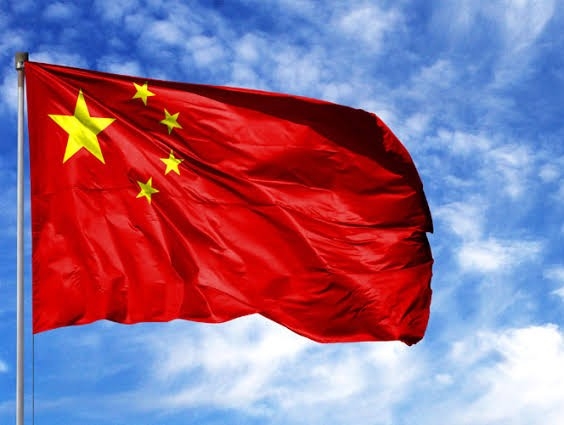
Anger increasing against China among the citizens of many countries
JULY 17 (WTN) - 21st century is the century of evolutionism. In this century, all democratic countries of the world are on the path of development and are engaged in improving the standard of living and economic progress of the people of their country. But in this century of developmentalism, China, a country with the leftist dictatorship system, is proving the headache for many countries, following the policy of expansionism.
As you are aware, just a few days ago, China raised a border dispute with India on the Galwan Valley of the East Ladakh near LAC. At the same time, the dispute also led to violent clashes between the soldiers of China and India. By the way, not only with India, but China also has border disputes with all its border neighbors. Not only this, but China has also been asserting its authority over several islands in the South China Sea and has been trying to influence the maritime trade from this region. And due to this reason, the dispute of China with many countries continues.
China's policy of aggressive expansionism, restrictions on the freedom of expression, and atrocities with religious minorities have started to protest not only in India but also in many other countries. Talking about Britain, a survey in June 2020 revealed that 49 per cent of British citizens surveyed were ready to boycott 'some Chinese goods'. At the same time, two-thirds of the people surveyed believed that the duty on the import of Chinese goods should be increased. Meanwhile, following the growing sentiment of anti-China in the country, the UK has banned Chinese company Huawei from the 5G network, giving a major blow to China.
Talk about America, the biggest economic power, so in May this year, 40 percent of the people surveyed in Washington expressed their intention not to buy 'Made in China' products. Actually, there are many reasons for anti-China sentiment in America; Such as Coronavirus infection and trade war. People of America feel that the Coronavirus infection epidemic has spread all over the world, including the US, due to the mistake and negligence of the leftist government of China.
At the same time, China has been on the targeti of America for a long time due to the trade war. And for this reason, in the last year, America blacklisted Huawei and ZTE of China as a threat to national security. After this, the US has banned China's state-owned China Mobile, and this year China Telecom.
Here, due to China's influence in the South China Sea and the Coronavirus epidemic, resentment against China is also increasing in Australia. According to a survey conducted in Australia, 88 per cent of Australians surveyed feel that they should not rely too much on Chinese imports and should buy indigenous products more and more by promoting indigenous production. At the same time, after the incidents of human rights violations in Xinjiang province of China, many Australian companies stopped importing cotton from China last year.
In countries like Vietnam, Taiwan, and the Philippines, there has been a long-standing anger against China's aggressive policy of expansionism. And even in these countries, there is a periodic boycott of goods manufactured in China. But even after growing protests across the world, China's leftist government continues to lead to border disputes with neighboring countries through a policy of expansionism. But the way China is showing its influence in the South China Sea, it seems that China will have to face a strong opposition from America, Japan, South Korea, and Australia.