People consuming red and processed meat prone to cancer
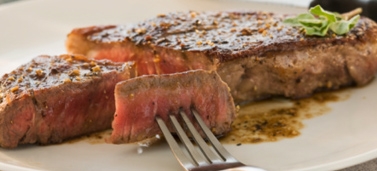
This is a shocking fact for a large number of people who consume red and processed meat.
A study published in LANCET reveals this astonishing fact. Few months back scientists from ten countries met at the International Agency for Research on Cancer (IARC) in Lyon, France. They wanted to evaluate the carcinogenicity of the consumption of red meat and processed meat.
The group of scientists found what is really alarming. There is sufficient evidence in human beings for the carcinogenicity of the consumption of processed meat.
Red meat refers to unprocessed mammalian muscle meat—for example, beef, veal, pork, lamb, mutton, horse, or goat meat—including minced or frozen meat; it is usually consumed cooked.
Processed meat refers to meat that has been transformed through salting, curing, fermentation, smoking, or other processes to enhance flavour or improve preservation. Most processed meats contain pork or beef, but might also contain other red meats, poultry, offal (eg, liver), or meat byproducts such as blood.
Red meat contains high biological-value proteins and important micronutrients such as B vitamins, iron (both free iron and haem iron), and zinc. The fat content of red meat varies depending on animal species, age, sex, breed, and feed, and the cut of the meat. Meat processing, , such as curing and smoking, can result in formation of carcinogenic chemicals, including N-nitroso-compounds (NOC) and polycyclic aromatic hydrocarbons (PAH), the study says.
Cooking improves the digestibility and palatability of meat, but can also produce known or suspected carcinogens, including heterocyclic aromatic amines (HAA) and PAH. High-temperature cooking by pan-frying, grilling, or barbecuing generally produces the highest amounts of these chemicals.
Depending on the country, the proportion of the population that consumes red meat varies worldwide from less than 5 percent to up to 100 percent and from less than 2 percent to 65 percent for processed meat.
The mean intake of red meat by those who consume it is about 50–100 g per person per day, with high consumption equalling more than 200 g per person per day. Less information is available on the consumption of processed meat.
The study published in LANCET says that the Working Group assessed more than 800 epidemiological studies that investigated the association of cancer with consumption of red meat or processed meat in many countries, from several continents, with diverse ethnicities and diets. For the evaluation, the greatest weight was given to prospective cohort studies done in the general population.
The largest body of epidemiological data concerned colorectal cancer. Data on the association of red meat consumption with colorectal cancer were available from 14 cohort studies. Positive associations were seen with high versus low consumption of red meat in half of those studies, including a cohort from ten European countries spanning a wide range of meat consumption and other large cohorts in Sweden and Australia.
Of the 15 informative case-control studies considered, seven reported positive associations of colorectal cancer with high versus low consumption of red meat. Positive associations of colorectal cancer with consumption of processed meat were reported in 12 of the 18 cohort studies that provided relevant data, including studies in Europe, Japan, and the USA
Supporting evidence came from six of nine informative case-control studies. Data were also available for more than 15 other types of cancer. Positive associations were seen in cohort studies and population-based case-control studies between consumption of red meat and cancers of the pancreas and the prostate (mainly advanced prostate cancer), and between consumption of processed meat and cancer of the stomach.
On the basis of the large amount of data and the consistent associations of colorectal cancer with consumption of processed meat across studies in different populations, which make chance, bias, and confounding unlikely as explanations, a majority of the Working Group concluded that there is sufficient evidence in human beings for the carcinogenicity of the consumption of processed meat.
Overall, the Working Group classified consumption of processed meat as “carcinogenic to humans” (Group 1) on the basis of sufficient evidence for colorectal cancer. Additionally, a positive association with the consumption of processed meat was found for stomach cancer.
The Working Group classified consumption of red meat as “probably carcinogenic to humans” (Group 2A). In making this evaluation, the Working Group took into consideration all the relevant data, including the substantial epidemiological data showing a positive association between consumption of red meat and colorectal cancer and the strong mechanistic evidence. Consumption of red meat was also positively associated with pancreatic and with prostate cancer.
Window To News