A teacher's passion transforms a village into an educational hub
Saturday - February 13, 2021 12:13 pm ,
Category : WTN SPECIAL
It’s a story that could be a plot for a feel good movie: an aimless young man stumbles upon his purpose in life and against all the odds brings about social change – with a little help from technology and even Bollywood.
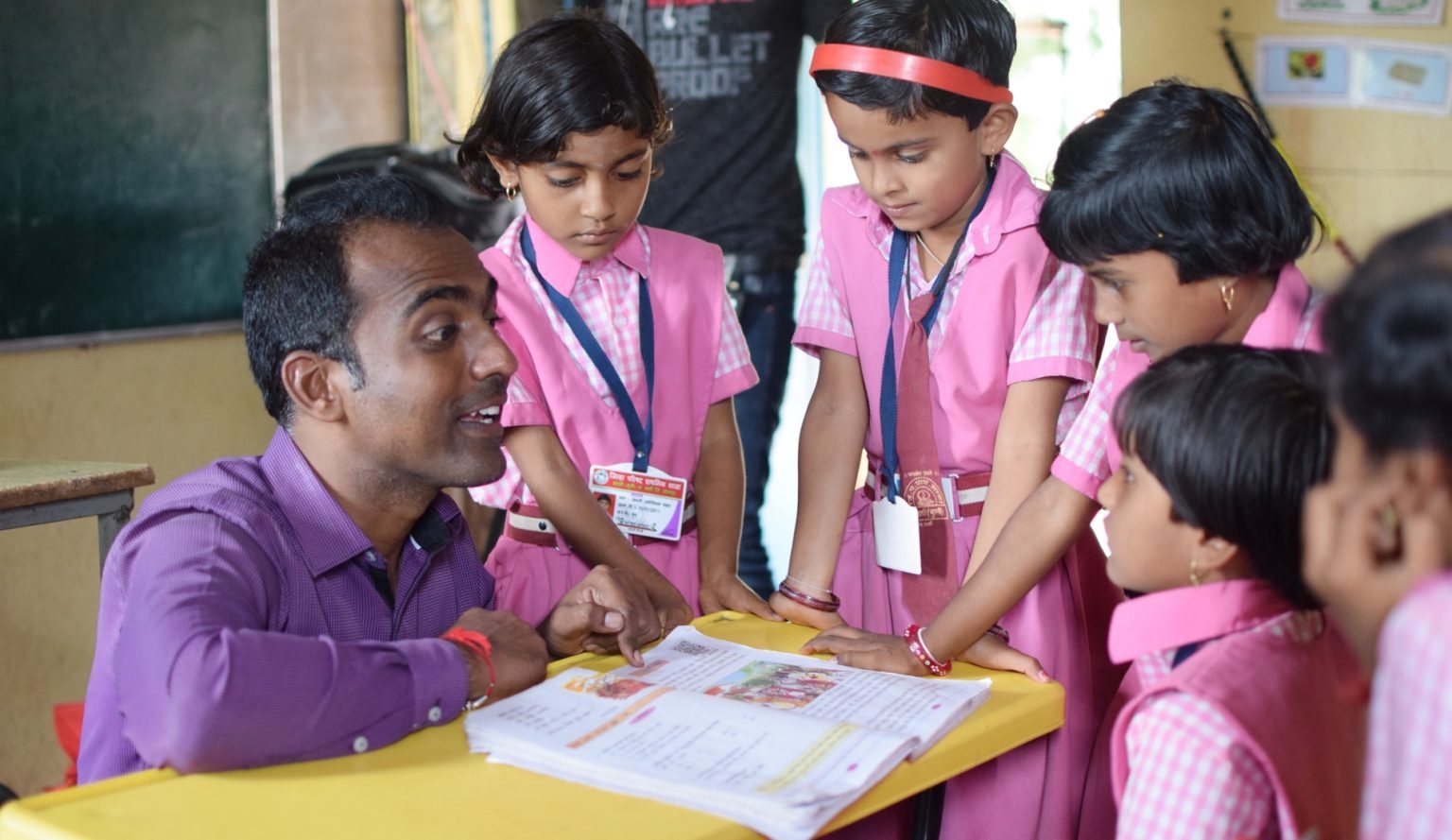
Meet Ranjitsinh Disale, an educator from an impoverished corner of western India.
In 2010, Indian teacher Ranjitsinh Disale heard that one of his teenage female students was going to marry a man in his 30s.
"I directly went to the girl's house and told her father, 'You cannot do this,' " says Disale, 32, who currently teaches third- and fourth-graders at a government school in Paritewadi, a small village in western India.
When the father didn't agree, Disale called the police because child marriage is illegal in India. Together they counseled the father. Finally, he called off the wedding.
It's actions like this that helped earn Disale the title of the world's most "exceptional teacher."
In December 2020, Disal had won the $1 million Global Teacher Prize, an annual award sponsored by the Varkey Foundation, a U.K.-based nonprofit working to improve access to education for underprivileged children, and by UNESCO, the U.N. agency for education, science and culture. He was one of about 12000 teachers from over 140 countries nominated for the prize.
The organizations praise Disale for going above and beyond his job description. Over the years, he has learned a new language, invented ways to help students learn with technology and even endured attacks — all to ensure his students, especially girls, can keep learning.
"[Disale has] transformed the life chances of young girls," the Varkey Foundation said in a statement. "The impact of [his] interventions has been extraordinary: There are now no teenage marriages in the village and 100% attendance by girls at the school."
So how did he do it?
“I made a five-year plan,” he recalls. “I set three targets for myself: to create awareness among parents about education, to get student attendance to 100 percent, and ultimately to make learning joyful and engaging.”
As a first step, he learned the local language, Kannada, and then translated the state’s curriculum and English textbooks into it.
To find out more about village families, he spent the first six months visiting people, participating in local cultural events, and conducted a survey about their socio-economic conditions, their education levels and so on. He discovered that most of his students were the first generation in their families to go to school, which explained the low attendance rates.
He then began promoting the importance of education with a missionary zeal. He went to homes and farms and encouraged parents to let their girls learn.
To entice more kids to his classroom and keep them there, he started showing Bollywood movies on his laptop. “By the end of 2010, I had achieved 99 percent attendance,” he laughs.
With his students at their desks, he started introducing them to educational videos and PowerPoint presentations linked to the syllabus.
“I learned a lot about using technology in the classroom in a meaningful way and I began applying that knowledge in my school. Each week, I would make videos, PowerPoint presentations, download videos, translate content using voiceovers and transfer it from my laptop to the mobile phones of my students’ parents,” he says.
To get parents involved in their children’s schooling, Disale would send them text messages every afternoon with details about homework and lessons. Then he set up an alarm that would go off on all school nights at 7 p.m. sharp. “That was a sign for the parents to stop doing their daily chores and ensure that their children were completing their homework.”
Soon he found that his students were responding to multimedia lessons better than traditional classroom learning but also realized that technology had its limitations. “For example, I wasn’t always able to transfer files successfully. Sometimes they were incompatible, at other times they would get corrupted,” Disale says.
Then one day, he saw a store clerk at a local convenience store scan a QR code to check out the items he’d bought. “I had no idea what a QR code was. So I didn’t even know what to type into a search engine. But after doing an image search, I learnt not just what it was called but also what a QR code could do!”
To enrich the learning experience further, he developed personalized programs for each student. He printed stickers with QR codes to go in their textbooks so that students could download learning materials directly onto their phones. It proved to be a breakthrough.
Their performance improved by an average of 20 percent with big strides in engagement. “Suddenly, you could see students who weren’t interested in reading before now reading efficiently. Those who were shy were now speaking confidently. And the writing skills of students improved a lot,” he says.
Disale shared his methods with other teachers across the state and by 2018 this QR-coded textbook format was adopted across India. The National Council of Educational Research and Training (NCERT) has incorporated QR codes in its textbooks to help students around the country understand subjects better by accessing additional content like videos via mobile phones, tablets, or laptops.
In 2017 he set up Virtual Field Trips (VFTs) using Skype and has since hosted 1,483 sessions showcasing destinations around the world for his classes.
He has also launched Let’s Cross the Borders, a Skype-based collaborative project that connects students from countries in conflict. The six-week program involves 150 schools and 5,000 students. It matches ‘peace buddies’ across countries, addresses issues of conflict, tries to find ways to resolve the problems and attempts to draw up plans of action for the future.
During the current pandemic, Disale helped his school adopt Microsoft Teams for lessons along with other tools, like OneNote and Sway. They attend classes from their homes, while Together Mode on Microsoft Teams provides them some semblance of a classroom.
While all of this has made learning enjoyable for students, Disale believes that the real positive outcome of this has been their increased levels of familiarity with technology.
“Earlier, students used to be afraid of technology. Now, they’re finding new ways of making it work for them. It has given them opportunity to access whatever they want to learn. And they no longer see their teacher as their only source of knowledge,” he says.
The Global Teacher Award comes with a prize money of a million US Dollars. Disale has requested that half-a-million be distributed equally among the remaining nine finalists that he beat.
He will receive 10 percent of his share every year for the next 10 years. And for the duration, he will be reporting about his work to Varkey Foundation that has instituted this award along with UNESCO.
Throughout 2021, Disale will also be addressing conferences all over the world.
In another time, he would’ve been travelling to these places himself. But the pandemic has meant that Disale will have to fulfil his commitments via video conferencing from a village that he’s put on the global map.
"I want to see many Ranjitsinh Disales from India," he says.
Meet Ranjitsinh Disale, an educator from an impoverished corner of western India.
In 2010, Indian teacher Ranjitsinh Disale heard that one of his teenage female students was going to marry a man in his 30s.
"I directly went to the girl's house and told her father, 'You cannot do this,' " says Disale, 32, who currently teaches third- and fourth-graders at a government school in Paritewadi, a small village in western India.
When the father didn't agree, Disale called the police because child marriage is illegal in India. Together they counseled the father. Finally, he called off the wedding.
It's actions like this that helped earn Disale the title of the world's most "exceptional teacher."
In December 2020, Disal had won the $1 million Global Teacher Prize, an annual award sponsored by the Varkey Foundation, a U.K.-based nonprofit working to improve access to education for underprivileged children, and by UNESCO, the U.N. agency for education, science and culture. He was one of about 12000 teachers from over 140 countries nominated for the prize.
The organizations praise Disale for going above and beyond his job description. Over the years, he has learned a new language, invented ways to help students learn with technology and even endured attacks — all to ensure his students, especially girls, can keep learning.
"[Disale has] transformed the life chances of young girls," the Varkey Foundation said in a statement. "The impact of [his] interventions has been extraordinary: There are now no teenage marriages in the village and 100% attendance by girls at the school."
So how did he do it?
“I made a five-year plan,” he recalls. “I set three targets for myself: to create awareness among parents about education, to get student attendance to 100 percent, and ultimately to make learning joyful and engaging.”
As a first step, he learned the local language, Kannada, and then translated the state’s curriculum and English textbooks into it.
To find out more about village families, he spent the first six months visiting people, participating in local cultural events, and conducted a survey about their socio-economic conditions, their education levels and so on. He discovered that most of his students were the first generation in their families to go to school, which explained the low attendance rates.
He then began promoting the importance of education with a missionary zeal. He went to homes and farms and encouraged parents to let their girls learn.
To entice more kids to his classroom and keep them there, he started showing Bollywood movies on his laptop. “By the end of 2010, I had achieved 99 percent attendance,” he laughs.
With his students at their desks, he started introducing them to educational videos and PowerPoint presentations linked to the syllabus.
“I learned a lot about using technology in the classroom in a meaningful way and I began applying that knowledge in my school. Each week, I would make videos, PowerPoint presentations, download videos, translate content using voiceovers and transfer it from my laptop to the mobile phones of my students’ parents,” he says.
To get parents involved in their children’s schooling, Disale would send them text messages every afternoon with details about homework and lessons. Then he set up an alarm that would go off on all school nights at 7 p.m. sharp. “That was a sign for the parents to stop doing their daily chores and ensure that their children were completing their homework.”
Soon he found that his students were responding to multimedia lessons better than traditional classroom learning but also realized that technology had its limitations. “For example, I wasn’t always able to transfer files successfully. Sometimes they were incompatible, at other times they would get corrupted,” Disale says.
Then one day, he saw a store clerk at a local convenience store scan a QR code to check out the items he’d bought. “I had no idea what a QR code was. So I didn’t even know what to type into a search engine. But after doing an image search, I learnt not just what it was called but also what a QR code could do!”
To enrich the learning experience further, he developed personalized programs for each student. He printed stickers with QR codes to go in their textbooks so that students could download learning materials directly onto their phones. It proved to be a breakthrough.
Their performance improved by an average of 20 percent with big strides in engagement. “Suddenly, you could see students who weren’t interested in reading before now reading efficiently. Those who were shy were now speaking confidently. And the writing skills of students improved a lot,” he says.
Disale shared his methods with other teachers across the state and by 2018 this QR-coded textbook format was adopted across India. The National Council of Educational Research and Training (NCERT) has incorporated QR codes in its textbooks to help students around the country understand subjects better by accessing additional content like videos via mobile phones, tablets, or laptops.
In 2017 he set up Virtual Field Trips (VFTs) using Skype and has since hosted 1,483 sessions showcasing destinations around the world for his classes.
He has also launched Let’s Cross the Borders, a Skype-based collaborative project that connects students from countries in conflict. The six-week program involves 150 schools and 5,000 students. It matches ‘peace buddies’ across countries, addresses issues of conflict, tries to find ways to resolve the problems and attempts to draw up plans of action for the future.
During the current pandemic, Disale helped his school adopt Microsoft Teams for lessons along with other tools, like OneNote and Sway. They attend classes from their homes, while Together Mode on Microsoft Teams provides them some semblance of a classroom.
While all of this has made learning enjoyable for students, Disale believes that the real positive outcome of this has been their increased levels of familiarity with technology.
“Earlier, students used to be afraid of technology. Now, they’re finding new ways of making it work for them. It has given them opportunity to access whatever they want to learn. And they no longer see their teacher as their only source of knowledge,” he says.
The Global Teacher Award comes with a prize money of a million US Dollars. Disale has requested that half-a-million be distributed equally among the remaining nine finalists that he beat.
He will receive 10 percent of his share every year for the next 10 years. And for the duration, he will be reporting about his work to Varkey Foundation that has instituted this award along with UNESCO.
Throughout 2021, Disale will also be addressing conferences all over the world.
In another time, he would’ve been travelling to these places himself. But the pandemic has meant that Disale will have to fulfil his commitments via video conferencing from a village that he’s put on the global map.
"I want to see many Ranjitsinh Disales from India," he says.