India an earthquake-prone country
Sunday - October 22, 2017 6:20 pm ,
Category : WTN SPECIAL
India an earthquake-prone country
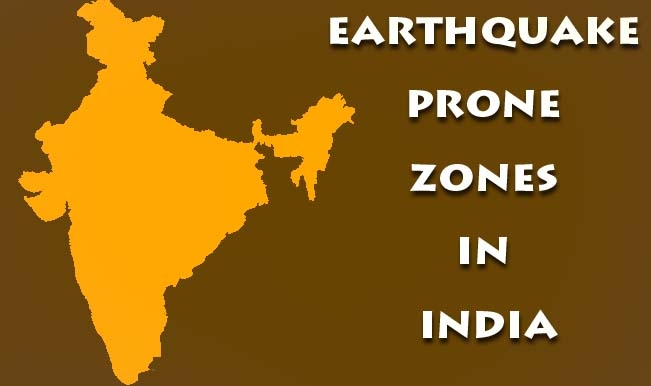
Most of the northern plains of India, along with the North East and West fall in the high seismic zone. This means over 60 percent of the country’s population lives in high-risk areas which can be ravaged by an earthquake of even medium intensity.
An earthquake is unpredictable and hence the risk factor multiplies manifolds. No pre-emptive measures can be taken to move people to safer locations in wake of a ‘possible’ earthquake as we can do in case of cyclones or floods. Moreover, much of the northern parts of the country are under the tectonic influence of the Himalayas, which is a young fold mountain chain still in the process of evolution.
Hence, the land below the Himalayas is shaky and formative which makes the whole region vulnerable to jerks and quakes. Any high-intensity quake in the Eurasian plate can wreck havoc in the whole Indian subcontinent and wipe out a considerable section of the population right from Afghanistan to Indonesia. India is bang at the centre of a volatile land mass and due to its huge population, the consequences can be alarming.
Unfortunately, India is least prepared to brave any such misfortune should it strike us today. The region which covers the seismic zone has some of the biggest cities in the country along with most densely packed demographic agglomerations. Most cities in the line of fire like Delhi, Srinagar, Ludhiana, Jaipur, Ahmedabad, Patna, Kolkata, Gwalior, Jabalpur, Guwahati etc are packed to the brim and they have little contingency safety plan in place to tackle an exigent situation.
Buildings have been constructed haphazardly, in blatant violation of safety norms; hundreds of illegal colonies have come up in these cities which don’t have any surety of structural integrity and in all likelihood will fall like a pack of cards when calamity strikes.
This is what has happened in the past in cities like Ahmedabad, Jabalpur, Latur, Patna and Bhuj. In spite of the dance of death and destruction we have seen, our urban spaces are still clogged and congested and constructions continue unabated without any concern about the ominous possibilities an earthquake portends. People too are largely unaware of the dos and don’ts during an earthquake and schools and colleges must do their bit to educate children and the youth on the rights and wrongs and preventive measures one can take during the incident of a quake.
In Japan and such countries prone to quakes people are so well trained and educated that they hardly fall prey to the dangers earthquakes pose. Such should be the basic drill people need to be initiated to so that they exactly know what to do and how to save their lives in case of emergencies.
There is no need to wait for the rescue staffers to come and help because the crucial delay in launching rescue effort is a decisive factor that proves fatal for many. If people are themselves equipped to manage crisis situations, many lives can be saved. People also need to be pro-active in updating their knowledge of basic life skills and also learn civic discipline and mutual cooperation, which is a must in crisis situations.-Windowtonews
An earthquake is unpredictable and hence the risk factor multiplies manifolds. No pre-emptive measures can be taken to move people to safer locations in wake of a ‘possible’ earthquake as we can do in case of cyclones or floods. Moreover, much of the northern parts of the country are under the tectonic influence of the Himalayas, which is a young fold mountain chain still in the process of evolution.
Hence, the land below the Himalayas is shaky and formative which makes the whole region vulnerable to jerks and quakes. Any high-intensity quake in the Eurasian plate can wreck havoc in the whole Indian subcontinent and wipe out a considerable section of the population right from Afghanistan to Indonesia. India is bang at the centre of a volatile land mass and due to its huge population, the consequences can be alarming.
Unfortunately, India is least prepared to brave any such misfortune should it strike us today. The region which covers the seismic zone has some of the biggest cities in the country along with most densely packed demographic agglomerations. Most cities in the line of fire like Delhi, Srinagar, Ludhiana, Jaipur, Ahmedabad, Patna, Kolkata, Gwalior, Jabalpur, Guwahati etc are packed to the brim and they have little contingency safety plan in place to tackle an exigent situation.
Buildings have been constructed haphazardly, in blatant violation of safety norms; hundreds of illegal colonies have come up in these cities which don’t have any surety of structural integrity and in all likelihood will fall like a pack of cards when calamity strikes.
This is what has happened in the past in cities like Ahmedabad, Jabalpur, Latur, Patna and Bhuj. In spite of the dance of death and destruction we have seen, our urban spaces are still clogged and congested and constructions continue unabated without any concern about the ominous possibilities an earthquake portends. People too are largely unaware of the dos and don’ts during an earthquake and schools and colleges must do their bit to educate children and the youth on the rights and wrongs and preventive measures one can take during the incident of a quake.
In Japan and such countries prone to quakes people are so well trained and educated that they hardly fall prey to the dangers earthquakes pose. Such should be the basic drill people need to be initiated to so that they exactly know what to do and how to save their lives in case of emergencies.
There is no need to wait for the rescue staffers to come and help because the crucial delay in launching rescue effort is a decisive factor that proves fatal for many. If people are themselves equipped to manage crisis situations, many lives can be saved. People also need to be pro-active in updating their knowledge of basic life skills and also learn civic discipline and mutual cooperation, which is a must in crisis situations.-Windowtonews
www.windowtonews.com