The Indo-Pak Indus water controversy
Thursday - October 26, 2017 12:33 pm ,
Category : WTN SPECIAL
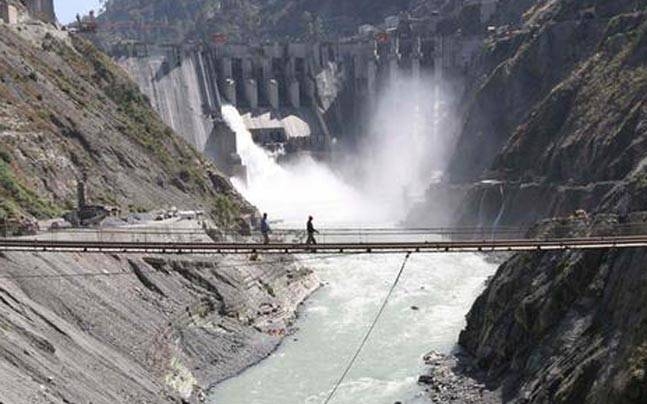
The Indo-Pak Indus water controversy
By Jaya Khare
The Indus water controversy started since the days after Independence. The fact is most of Pakistan’s rivers originate in India or majorly flow through India before reaching down to Pakistan. Therefore, technically it becomes possible for India to stop water to Pakistan by manipulating the flow and channel of these rivers whenever she wants.
At least hypothetically this is a possibility in case of an emergency situation like water scarcity in India or as a retaliatory measure during war etc. This was a reason for panic for Pakistan.
Therefore, in 1960, with the mediation of the World Bank, India and Pakistan signed a water-sharing treaty that ensured not only an equitable distribution of the waters of the seven rivers of the Punjab-Himachal –Kashmir region, but also provided an operative framework within which the sharing modalities would be followed so that anyone violating the treaty would be questioned and occasions of conflict are minimised.
As per the treaty, the three eastern rivers— Ravi, Beas and Sutlej came under India’s full control, while the western rivers, the Indus, Jhelum and Chenab were given to Pakistan, with India being allowed to use 20 percent of the Indus water for non-consumptive use like irrigation etc.
The treaty is hailed the world over as one of the most liberal and justified of treaties that would benefit both countries and almost obliterate the chances of a conflict over it.
However, due to lack of infrastructure and technological wherewithal of that type and standard, India is hardly able to use 4 percent of the Indus water from the allotted quota of 20 percent. Same is the situation on the other side of the border. Pakistan woefully lacks the right infrastructure to store or utilise its full quota of water and most of the water of these rivers flow unused into the Arabian Sea. Could they been tapped adequately, there would be no water scarcity in both the countries.
Pakistan, however, still cries foul from time to time and blames India of stalling water flow to the country. Any hydropower project that India envisages on these rivers upstream is scuttled by Pakistan for fear of water shortage it would face.
Whenever there is drought or water shortage in Pakistan, India is blamed for regulating the water flow. Also, after the Uri attack there were speculations that India could mull stopping Indus water to Pakistan or at least increase its usage here up to full 20 percent of its quota, which would lessen water availability to Pakistan.
This gave heartburns to Pakistan as it waited with bated breath. However, it must be understood that doing any such thing is a highly cost-intensive and time taking effort that is not worth it. India does not and would not ever stop water to Pakistan in all likelihood, because of ethical considerations.
Add to that the technological hurdles and logistic difficulties in putting a system in place that could be directed solely towards troubling Pakistan. But having said that, it is also true that India will need to take care of her power and consumption needs and she must continue with the hydroelectricity projects or irrigation projects she has plans for without balking under any pressure.
It is well within India’s rights to ensure facilities to her people even if that means posing some problems for Pakistan.- Window To News