Rajasthan, Bihar and West Bengal the top states with the highest percentage of child marriage
Saturday - January 5, 2019 12:58 pm ,
Category : INDIA
The much talked about Beti Bachao Beti Padhao programme was created to ensure the education of girls and reduce dropouts, thus delaying their marriage. A significant part of the Beti Bachao Beti Padhao advocacy campaign is focussed on creating awareness and discouraging the practice of child marriage. Mahila Shakti Kendra (MSK) scheme focuses on creating awareness and equipping women at the village level with information on issues of gender equality and empowerment, a critical part of which will be the prevention of child marriage. This is a continuous process and Government undertakes media campaigns and outreach programmes to address this.
Prohibition of Child Marriage Act, 2006 was enacted to prohibit child marriages rather than only restraining them. The States/ UTs from time to time are being regularly pursued for effective implementation of the Prohibition of Child Marriage Act, 2006. Ministry of Women and Child Development regularly sends out letters to District Collectors to increase alertness to prevent underage marriages during festivals such as Akshaya Tritiya/Akha Teej. The prevention of child marriage and protection of the girl child is a prominent part of the National Plan of Action for Children, 2016. These issues cannot be tackled by legislative interventions alone.
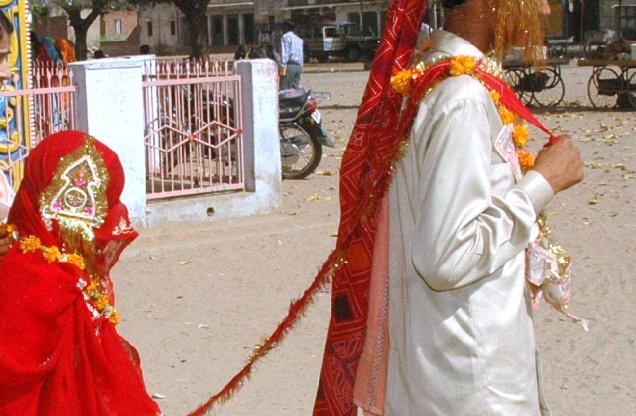
As per census, 2011, the percentage of child marriage in 2011 was 31.6% which was 52 % in 2001 which shows a decreasing trend. Rajasthan, Bihar and West Bengal were among the top states reporting the highest percentage of child marriage among both boys and girls. As per National Family Health Survey (NFHS)-4(2015-16), the percentage of women aged between 15-19 years, who were already mothers or pregnant was 7.9%. There is a reduction from 16% as measured in National Family Health Survey (NFHS)-3 (2005-06). The practice of Child Marriage is largely due to the prevailing social customs, tradition, illiteracy, poverty, low status of women in society and lack of awareness.
Prohibition of Child Marriage Act, 2006 was enacted to prohibit child marriages rather than only restraining them. The States/ UTs from time to time are being regularly pursued for effective implementation of the Prohibition of Child Marriage Act, 2006. Ministry of Women and Child Development regularly sends out letters to District Collectors to increase alertness to prevent underage marriages during festivals such as Akshaya Tritiya/Akha Teej. The prevention of child marriage and protection of the girl child is a prominent part of the National Plan of Action for Children, 2016. These issues cannot be tackled by legislative interventions alone.
As per census, 2011, the percentage of child marriage in 2011 was 31.6% which was 52 % in 2001 which shows a decreasing trend. Rajasthan, Bihar and West Bengal were among the top states reporting the highest percentage of child marriage among both boys and girls. As per National Family Health Survey (NFHS)-4(2015-16), the percentage of women aged between 15-19 years, who were already mothers or pregnant was 7.9%. There is a reduction from 16% as measured in National Family Health Survey (NFHS)-3 (2005-06). The practice of Child Marriage is largely due to the prevailing social customs, tradition, illiteracy, poverty, low status of women in society and lack of awareness.