Discussions on over Australian presence in Malabar: US Pacific Fleet chief
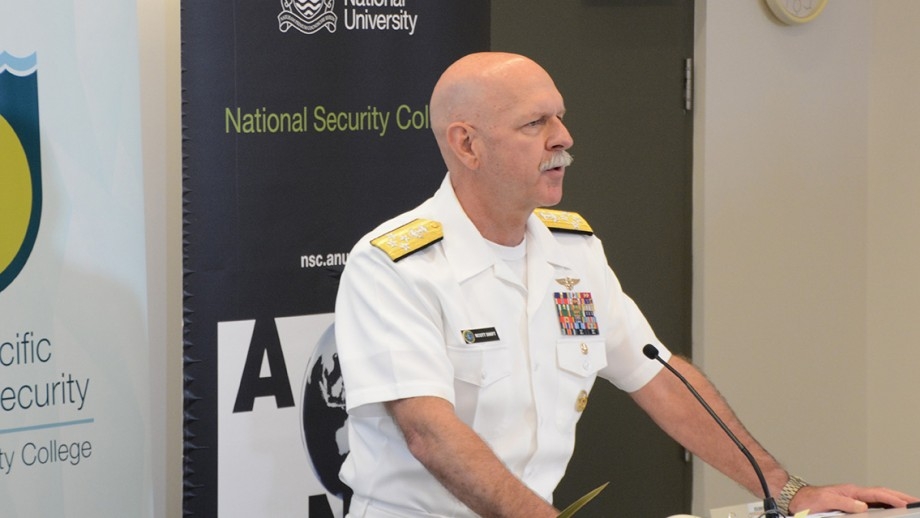
New Delhi May 5 (IANS) With Australia seeking a role as an observer in the India-US exercise Malabar US Pacific Fleet commander Scott H. Swift said on Friday that discussions are still on over the issue.
Talking to reporters here Admiral Swift who is on a visit to India said there is a desire to increase participants in the exercise but added that it can be done only step by step.A
What countries are included in Malabar exercise is a dialogue which is robust and ongoing. Last year the Japanese participated... a final consensus on who will be the participants this year is still open.
As for observer s status there is a process we go through Afor all our exercises. The first step is to attend in observer s status and then as participant. But ultimately it is a bilateral dialogue between the US and India there is a desire to increase the participant but it must be done step by step in a collaborative way he said.
Asked if anti-submarine warfare (ASW) is going to be an important component of the exercise scheduled to be held in the Bay of Bengal in July he said it has always been a part but added that whether US Navy s P-8 aircraft will participate depend on their availability.
ASW has always been an element of Malabar. There is a desire on my part and of Indian Navy to continue to deepen all elements of the exercise so I expect ASW training would deepen. We continues to learn more about how to operate our P8s more effectively I expect the Indian Navy has the same experience he said.
I won t comment on whether P8 or submarines will be there but that is what the desire is he said.
Malabar is a joint exercise between India and US which now has Japan as a permanent partner.
In 2007 Australia was included along with Japan in the exercise. An outlash from China led to its withdrawal.
Australia has expressed interest in participating in the Malabar exercise seeking the observer s role this time.
Asked if India and US were planning any joint patrols in the Indian Ocean Region Swift said: I hesitate a bit on the term joint patrol terms are important. We do pass-ex have done multiple operations throughout the Pacific with many nations this is more a norm than an exception. But this is a decision for individual countries to make.
He also stressed that security should not be about security alone and it should bring prosperity adding thatthe rule of international law has brought prosperity to Asia-Pacific and made it the world s growth engine.
Many suggest the Indo-Asia-Pacific region is the economic engine of the world. The mechanisms by which that prosperity was enabled has been those norms and rules... the question is why would we want to change that rules-based order. Specifically if changes are needed we have set up institutions to manage those changes he said.
--IANS
ao/vd