
"Kanha National Park" is famous for abundance of wildlife and biological diversity
Tuesday - September 7, 2021 10:10 pm ,
Category : MADHYA PRADESH
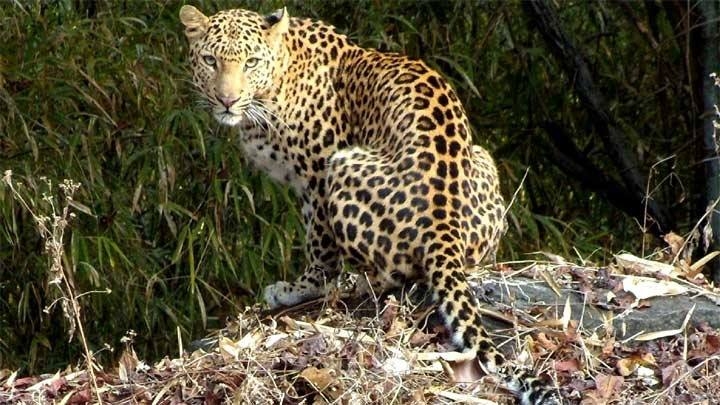
Bhopal 07 September 2021: Along with the domestic tourists, foreign tourists are getting attracted very quickly towards the national parks established in the state. One of them is Kanha National Park. This park is full of forest wealth, abundance of wildlife and biological diversity.
Kanha National Park is known for its unique and distinctive natural habitat. The entire forest area of Kanha still preserves the glorious past, due to which this park attracts domestic and foreign tourists.
Bordering Mandla and Balaghat districts, this park is known for its natural and environmental beauty. It is one of the largest national parks in the country in terms of area. Core Forest Division (National Park) and Buffer Zone Forest Division come under Kanha Tiger Reserve. The area of these two forest divisions is 940 and 1134 sq. km respectively. An area of 91 thousand 743 sq km in the national park is notified as Critical Tiger Habitat. Apart from this, there is a satellite mini Core-Fen Sanctuary, a wildlife sanctuary under the Tiger Reserve, which is spread over an area of 110.74 sq. km.
There are many wild animals including 118 tigers and 146 leopards
According to the Wildlife Census Assessment 2020, 118 tigers and 146 leopards are present in the Tiger Reserve. Tigers include 83 adults and 35 cubs. Apart from them, wild dog, hyena, jackal, wolf, bear, fox, wild cat, wild boar, gaur, chital, barasingha, sambar, Medak-Medki deer, chausingha, blue bull, mongoose, water dog (otter), porcupine, langur, monkey, wild species of peacocks are found. Along with this, about 43 species of mammals, 325 of birds, 39 of reptiles, 500 of insects, 114 of spiders and many species of moths and butterflies also attract tourists.
These sites of the park are very special
Phen Sanctuary – A special unit of the Tiger
Reserve is the Phen Sanctuary. In the year 1983, 110 sq. km area was declared as Phen Sanctuary. The area has developed significantly over the years as a habitat for wildlife. In this area in the past 38 cattle, cows, buffaloes used to destroy the forest area by staying here. Between the year 1997-98, all the camps were removed from here under a special campaign, since then the forests here have become very good, due to which now tigers, leopards, bison, chital, sambar, wild dog etc. are seen roaming here.
Shravantal - There is a Shravantal at a distance of 4 km from Kanha. According to mythological belief, the death of Shravan Kumar, known for his devotion to his parents, is believed to have occurred at this place from the arrow of King Dasharatha. Makar Sankranti fair used to be held here till many years ago. There is water throughout the year in the Shravantal, due to which there is always moisture on account of seepage of water in the Menharnala and Deshinala area located below, which is a suitable habitat for the tiger. Barasinghas enter the water and feed here on aquatic plants.
Kisli Maidan (Chuppe Maidan) - This is the main entrance to the park. In the year 1986-87, the people settled here were settled outside the park at Kapot Bahra. Two and a half decades ago, the office of the saw mill used to run from here.
Digdola - A balancing rock in the north east hill of Kisli range maintains its balance on a balanced rock. This area is called Digdola. It is famous as a place of worship for the tribals.
Kanha Maidan - Grasslands are situated around Kanha. Earlier, farming used to be done here. After the resettlement, 26 families were settled in Manegaon in the year 1998-99. After this the fields converted into meadows, due to which the number of herbivorous wildlife increased.
Kanha Anicut - Anicut built in Deshinala is considered of multi-use for wildlife along with water conservation. This Anicut was built 72 years ago.
Chuhri - Chuhri area is at a distance of 3 km from Kanha. The place having water is called Chuhri. This area is considered suitable for tiger habitat.
Barasingha Fencing - It was constructed fifty years ago. The conservation of Barasingha is done in this area only. In relation to theis, some barasinghas are kept here as per the requirement within the carnivorous proof fencing for research/monitoring etc. They are later released when the number of barasinghas increases.
Bisanpura - Bisanpura Maidan is situated on the Bisanpura - Kanha-Mukki road. Earlier this place used to be a small village. Between 1974-76, 13 families were displaced from here and settled in Bhilwani Vangram group. Presently, the place is home to a large number of herbivores as good pastures have developed. Due to the abundance of water, the movement of wildlife from across the mountain to Kanha is very good. Barasingha, chital, bison, wild boar, bear and vulture are seen in this area.
Sondhar and Sondhar Talab - Sodhar Maidan is situated on the Kanha-Mukki road. Earlier this place used to be a village. Between 1974-76, 11 families were displaced from here and settled elsewhere. Sondhar Talab is very old. Pastures were developed in place of fields which are suitable for Barasingha. There are five ponds in this area in the same order, which is in descending order from top to bottom. As a result, due to proper use and conservation of water, it is suitable for Barasingha, wild boar, chital and bison.
Ghorela - Ghorela Maidan is at some distance from Sondhar. Before the year 1974-76 there was a village out of which 22 families were displaced and settled in Mukki and Dhaniyajhor. Barasinghas are seen here in good numbers.
Lapsi Kabar - At some distance from Bisanpura on Khapa Tirahe towards Mukki, there is Lapsi Kabar on the side of the road. Lapsi had lot of information about wildlife. He was an ally of hunters when hunting was allowed in the past. There is a legend that Lapsi used to use his wife as bait during tiger hunting. One day when a tiger attacked his wife while hunting, he himself clashed with the tiger, due to which both of them died. It is also believed that a tiger appears when a stone is placed on the tomb of Lapsi.
Saunf - The Saunf area located on the Aurai road was earlier a village. 52 years ago, 29 families of this village were settled in Bhanpur Kheda village. At present there are good grasslands. This area is considered to be a favourite for Barasinghas. There are many ponds and dams for water harvesting. Barasingha and chital are mainly found in the area. In the month of July 1993, Forest guard Late Chandan Lal Wakat was martyred here while fighting with hunters. Since then the name of this circle is "Chandan Circle". Saunf area is the best habitat for Barasingha.
Raunda - The "Raunda" area is located at a distance of 4 km from Saunf. This area was also a village earlier. Between 1974-76, 53 families were settled in Premnagar, Vijayanagar and Karivah from here. There are many meadows in this area. This is the habitat of the Barasingha.
Darbari Pathar-Naseni Pathar - There is a large stone behind the Chimta camp, which is about 20 meters wide and 35 feet high. This stone is also called "Naseni stone". Small stones are placed on it like chairs. Legend has it that demons used to sit here and hold court.
How to reach National Park
The nearest place for tourists to reach Kanha National Park by air is Jabalpur 100 km, Raipur 250 km and Nagpur 300 km. Similarly, the nearest railway stations are Nainpur, Gondia and Jabalpur. Khatia and Sarhi Gate of Mandla district can be reached from Nainpur.
962 staff are deployed for the protection of wildlife
For the protection of wildlife, 962 people including Assistant Conservator of Forests, Forest Rangers, Deputy Forest Rangers, Foresters, Forest Guards, Permanent Personnel, Security or Committee Workers and Ex-Servicemen are posted in KTR. Apart from them, 162 men and 13 women play the role of guide in the reserve area.
Tourist numbers increase every year
National-international tourists visit "Kanha Tiger Reserve" regularly. It is generally open from October to June 30. Khatia, Kisli, Sarhi and Mukki are 4 gates to enter the National Park. Similarly, there are hotels of other big houses including Madhya Pradesh Tourism. In the year 2019-2020, 90 thousand 135 domestic, 13 thousand 875 foreign tourists visited the core zone and 13 thousand 928 domestic and 305 foreign tourists visited the buffer zone. In the year 2020-2021, more than 1.5 lakh domestic and 109 foreign tourists visited the core zone. 19 thousand 395 domestic and 6 foreign tourists visited the buffer zone. In the year 2020-21, a total of more than 1.5 lakh tourists came to the core zone and 19 thousand 401 tourists to the buffer zone.
Park management received honour
Kanha Coffee Table Book was awarded the “India Tourism Award” for Park Management by the Government of India under the category ‘Best Publication in English Language’ in the year 2019. In the year 2020, the park has been rewarded by the state government for the excellent operation of the ‘Anubhuti programme’ – Window to News


